In depth
Emergency Toilet Repair in Phoenix: how the job actually runs.
Emergency toilet repair is for the toilet that is overflowing and will not stop, the one that backs up every time it is flushed, and the one that is leaking around the base into the floor. In a house with one bathroom, or a rental with tenants, a toilet out of service is a real problem. But many toilet faults are not emergencies, and knowing which is which decides whether you pay an after-hours dispatch fee or a daytime service call for the same repair.
Stop the water first
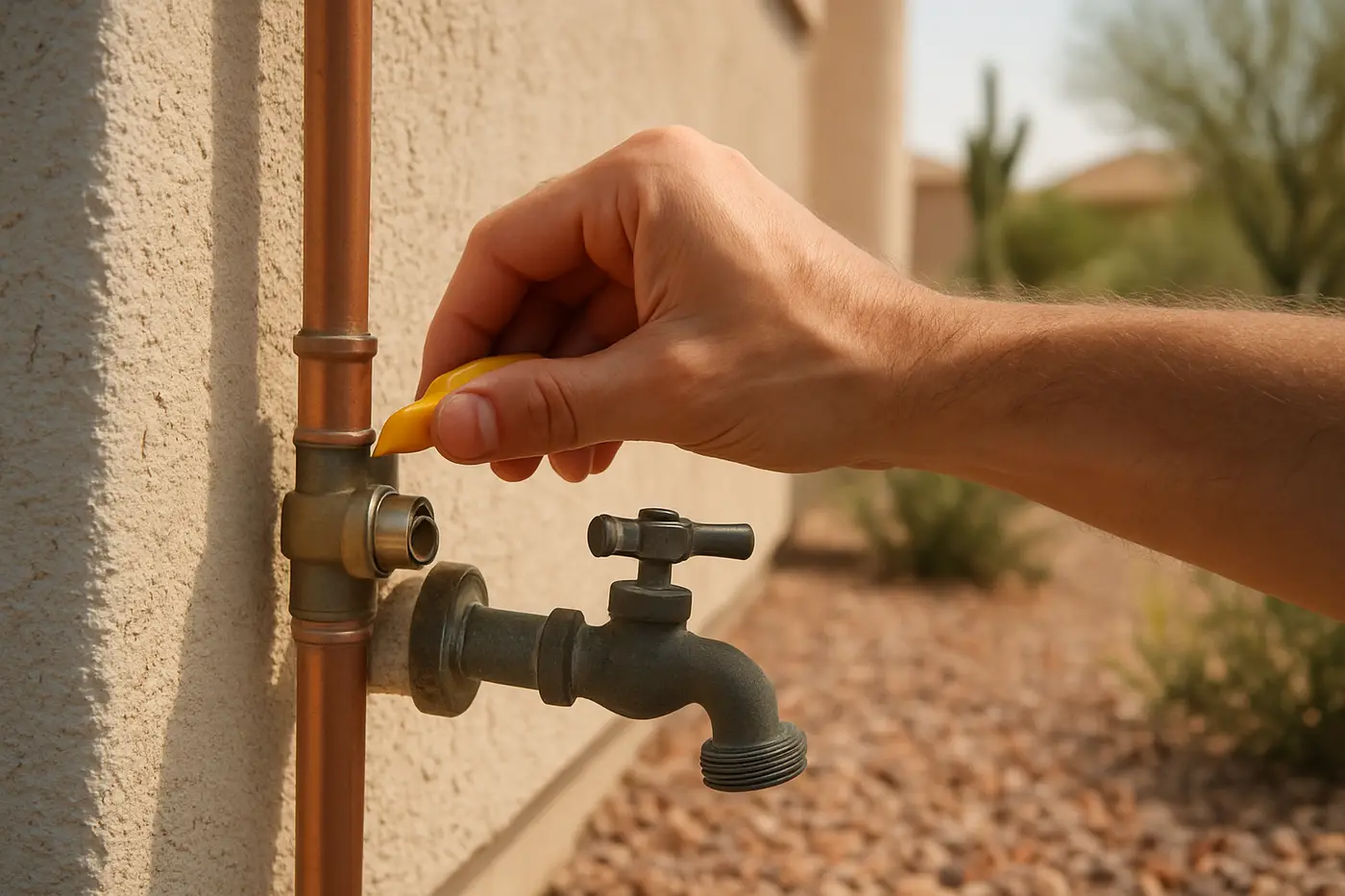
Every toilet has a supply valve, the angle stop, on the wall or floor behind it. Turn it clockwise until it stops. If it will not turn or the handle spins, lift the tank lid and push the float down or hold the flapper closed by hand to stop the fill, then shut the main at the front of the house; the walk-through is in how to shut off the water to your Phoenix home. If the toilet is overflowing with sewage rather than clean water, stop using every other fixture too, because the problem is probably the main line, not the toilet.
Emergency or morning?
Call now: the bowl is overflowing and will not stop; the toilet backs up and the tub or shower fills at the same time, which is the main sewer line; the supply line has burst and water is running; sewage is on the floor; or it is the only toilet in a home where people need it tonight.
Can wait for daytime rates: a toilet that runs constantly but does not overflow, once the angle stop is closed; a weak or incomplete flush; a slow leak at the base you have just noticed; a loose seat; a toilet that rocks; a wax ring smell with no water on the floor; a phantom flush at night. Closing the angle stop makes all of these safe until morning, and the repair costs the same at 9 a.m. without the $150 to $350 dispatch fee.
What goes wrong with Phoenix toilets
Hard water in the tank. At 10 to 17 grains per gallon, Phoenix water scales fill valves, flappers and the small rim jets under the bowl edge. A flapper that no longer seats runs the tank; scaled rim jets weaken the flush until waste is left behind and the toilet clogs more often. A single running toilet can waste hundreds of gallons a day, according to EPA WaterSense. Fill valve and flapper replacement is the most common toilet repair here.
Failed supply lines and angle stops. Street pressure above 80 psi in many zones, held back by a pressure reducing valve that wears out after roughly 10 to 15 years. When the PRV fails, the braided or plastic toilet supply line is one of the first things to burst. Angle stops in polybutylene-era homes and older galvanized homes seize, and then leak when turned.
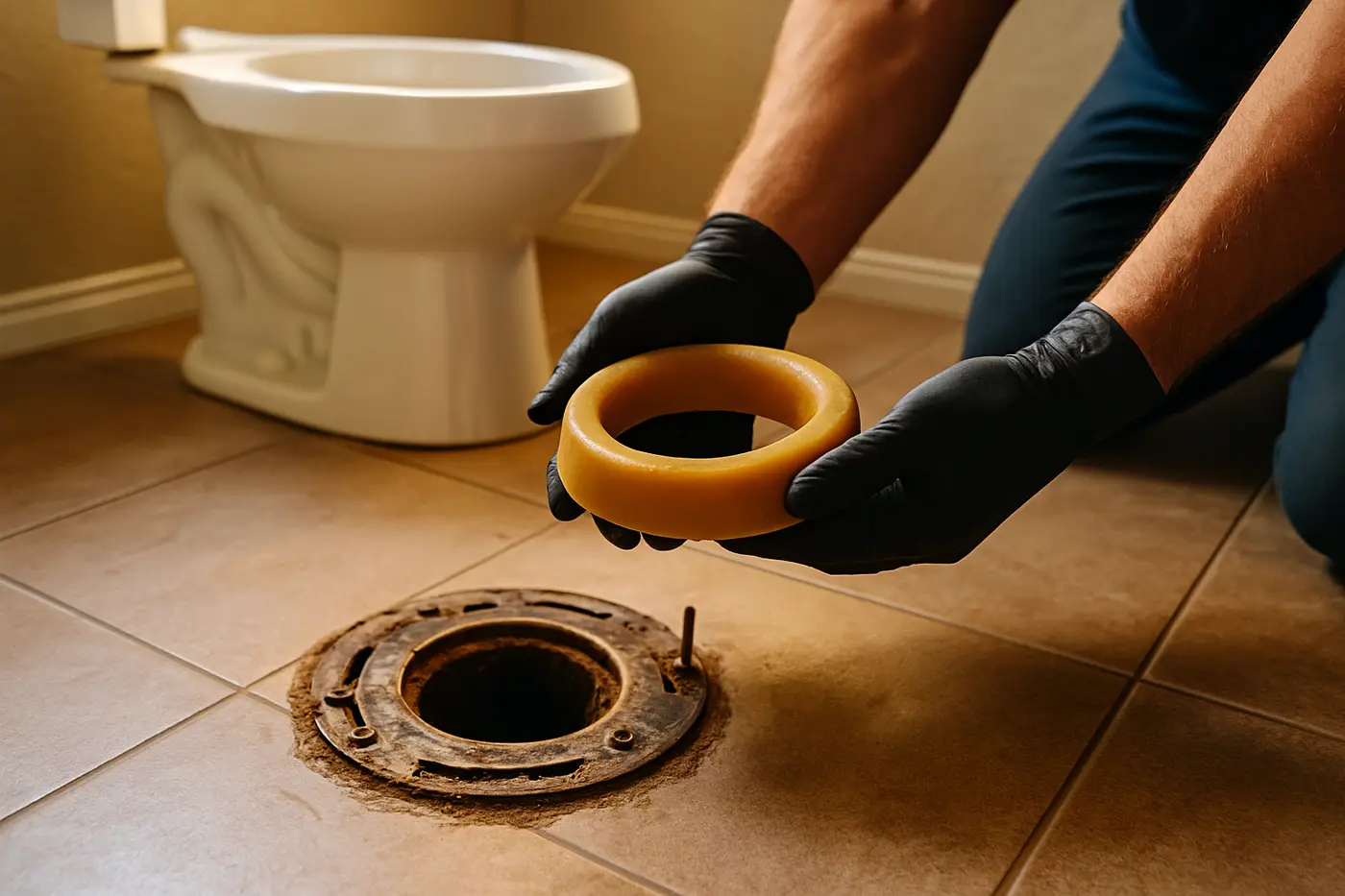
Wax rings and the heat. The wax seal between the toilet and the flange dries and fails over time, faster in a bathroom that is not used; a sewer gas smell near the toilet, water at the base after flushing, or a toilet that rocks all point to it. Unused bathrooms in Phoenix also lose their P-trap water to evaporation, so a smell in a guest bath is often just a dry trap in the shower or floor drain.
Old flanges and cast iron. Pre-1960 homes in Coronado, Willo, Uptown and Sunnyslope have cast iron closet bends and flanges that rust and break, and clay drains under them that catch roots. A toilet that clogs repeatedly with nothing wrong in the bowl is often a drain problem downstream.
Rentals and multi-unit. Student housing in Tempe, apartment complexes in Alhambra and condo towers in Downtown Phoenix have high turnover and things flushed that should not be: wipes, hygiene products, toys. A shared stack means one clog affects the units below, and access runs through the property manager.
How the repair runs
Clogs. A closet auger clears most bowl and trap clogs in one visit. If the auger comes back clean and the toilet still backs up, the problem is in the branch or main drain, and the plumber moves to a cable through the cleanout, which is emergency drain cleaning territory. Repeated main line backups get a camera; see sewer line repair.
Running, weak or phantom flush. Fill valve, flapper, flush valve seat and float are replaced with parts from truck stock, and scaled rim jets are cleared. $150 to $450.
Leaks at the base. The toilet is pulled, the flange inspected and repaired or replaced if broken, a new wax or waxless seal set, and the toilet reset with new bolts. $150 to $450 for the seal work; flange repair on cast iron is quoted separately.
Supply line or angle stop. Both replaced together; a new supply line on a seized angle stop is a job half done. The plumber checks house pressure while there, because a PRV that burst one line will burst the next.
Replacement. A cracked tank or bowl, a toilet that has been rebuilt twice, or an old high-volume unit that clogs by design is replaced with a standard unit, installed, for $400 to $1,100. Replacement is also the answer when the bolt holes or trapway have failed.
Repair or replace?
| Symptom | Repair | Replace |
|---|---|---|
| Runs constantly, fills slowly, weak flush | Fill valve, flapper, rim jets: $150–$450 | |
| Water at the base, rocks, smell | Wax ring and bolts: $150–$450 | If the flange has failed and the bowl is cracked |
| Supply line burst | Line and angle stop, check the PRV | |
| Clogs repeatedly, auger finds nothing | Drain cleaning downstream | If it is an old high-volume unit |
| Cracked tank or bowl | Yes, $400–$1,100 | |
| Rebuilt twice already | Usually the better money |
What it costs
Typical Phoenix ranges, final price quoted on site in writing before work starts. Toilet repair covering the fill valve, flapper or wax ring: $150 to $450. Toilet replacement with a standard unit installed: $400 to $1,100. Clearing the branch drain behind a toilet: $150 to $450. Main sewer line clearing through the cleanout: $250 to $700. A business-hours service call is $89 to $189, credited toward the repair; after-hours dispatch is $150 to $350, explained before anyone leaves.
Toilet work is a favorite of unlicensed operators, because a single toilet job sits under the $1,000 handyman exemption. That is fine for a flapper. It is not fine when the quick fix hides a broken cast iron flange or a main line problem. What to check before you book a cheap emergency plumber covers the questions to ask, and any license can be checked at azroc.gov.
No permit is needed for toilet repair or a like-for-like replacement. Standard Arizona homeowners policies (HO-3) treat a burst supply line or an overflow as sudden discharge and cover the water damage, not the toilet; photos before cleanup and the plumber’s report help.
Close the angle stop, then call or send the form. Tell us whether it is clean water or sewage on the floor and whether anything else in the house is backing up, and you will hear straight away whether tonight is worth the dispatch fee.
Last updated September 05, 2026