In depth
Slab Leak Repair in Phoenix: how the job actually runs.
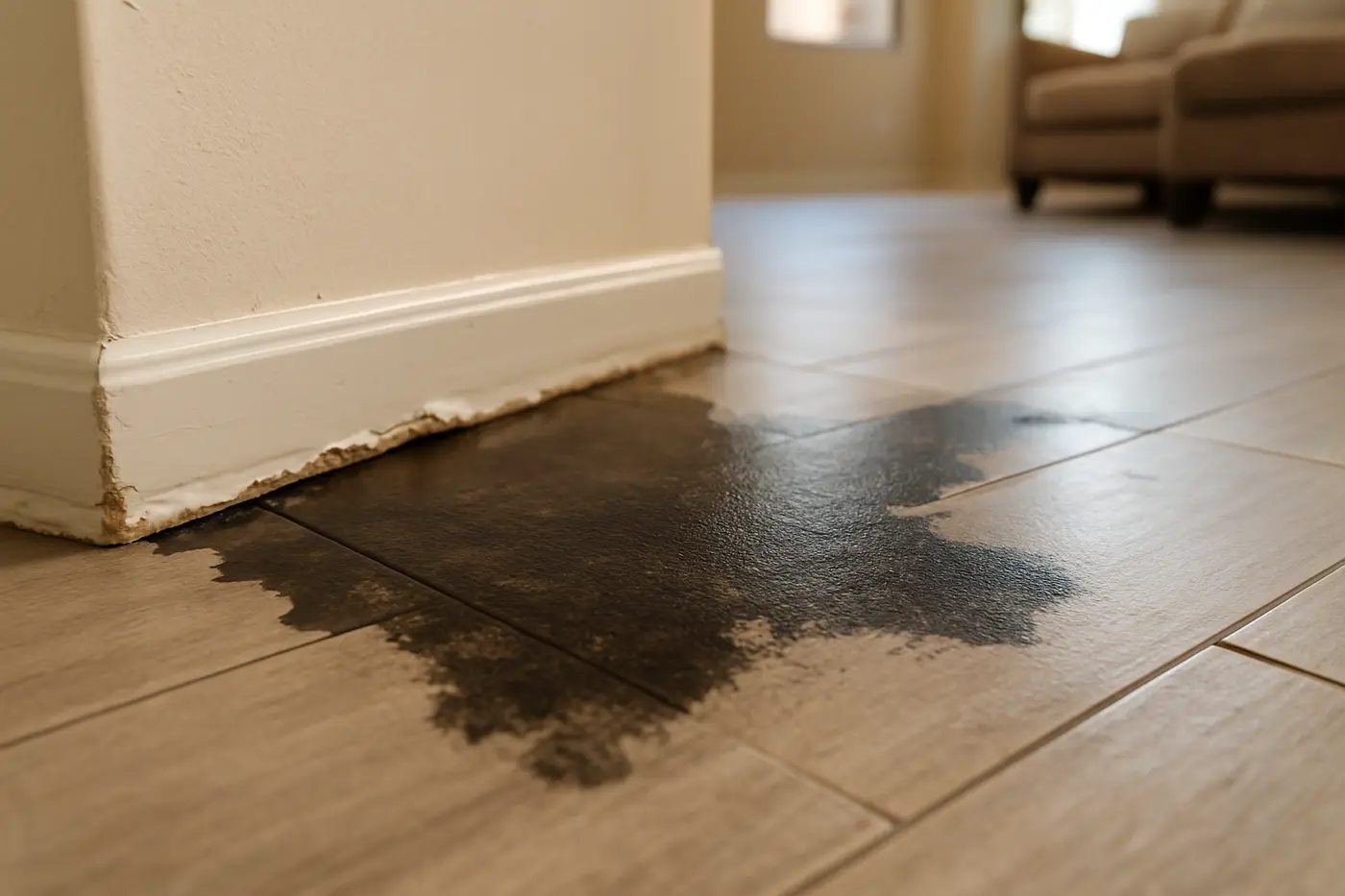
A slab leak is a leak in a water line that runs under the concrete foundation of the house. Almost every Phoenix home sits on a slab-on-grade foundation with no basement, and in homes built from the 1960s through the 1990s the copper supply lines usually run through or under that slab. When one develops a pinhole, the water has nowhere to go but into the soil under the house, up through the slab, or out under the footing. You need slab leak repair when the meter keeps spinning with everything off, when a floor is warm or damp for no reason, or when the water bill jumps and you cannot find a leak anywhere above ground. EPA WaterSense has guidance on using the meter to check for hidden household leaks.
Is a slab leak an emergency?
Sometimes. A slab leak on the hot line can move a lot of water fast and will run the water heater constantly. A slab leak that has lifted tile, buckled a wood floor or soaked carpet is doing damage every hour. And any leak that has reached an outlet, the air handler closet or the electrical panel is an emergency.
Many slab leaks, though, are slow. If the meter creeps rather than spins, nothing is visibly wet, and you can shut the main overnight without hardship, the detection and repair can happen at daytime rates. The one thing not to do is wait weeks: wet soil under a slab keeps the leak hidden while it undermines the footing, and the water bill climbs the whole time. The early signals are covered in slab leak signs every Phoenix homeowner should know.
Why Phoenix slabs leak
Hard water and copper. Phoenix water runs 10 to 17 grains per gallon depending on the blend of Salt River, Verde River and Colorado River water, well into the “very hard” class. Over decades, scale and turbulence at bends and fittings thin copper from the inside until a pinhole opens.
Abrasion at slab penetrations. Where a copper line comes up out of the slab to a wall, the pipe was often set directly against concrete. Thermal expansion, especially on hot lines in a city where summers run above 110°F, rubs the pipe against the slab edge until it wears through.
Electrolysis. Copper in contact with rebar, other metals or mineral-rich soil corrodes at the contact point.
Soil and irrigation. Flood irrigation lots in Arcadia, Laveen and parts of Central Phoenix keep the soil around and under foundations wet, which both hides the leak and speeds corrosion. Mature trees on those lots add root pressure against the footing.
Post-tension slabs. Homes built from the 1990s on often sit on post-tension slabs with steel cables under tension inside the concrete. Cutting into one blindly is dangerous, which is one reason rerouting overhead is often the right choice in Ahwatukee, Desert Ridge and Laveen homes of that era.
How a slab leak is found
Guessing is expensive, because every guess is a hole in your floor. The sequence is:
- Confirm it is under the slab. Every fixture, the water heater, the irrigation and the pool fill are isolated one at a time while the meter is watched. A leak that stops when the water heater is isolated is on the hot side; that alone halves the search.
- Pressure test. Hot and cold sides are tested separately to confirm which line has lost integrity.
- Locate. Acoustic listening equipment picks up the sound of pressurized water escaping under concrete. Thermal imaging finds the warm spot from a hot-line leak through tile. Tracer gas is used where the acoustic signal is weak.
- Mark and quote. The location is marked on the floor, and you get two prices in writing: a spot repair and a reroute.
Detection is its own service at $250 to $600, described in full on our leak detection page, and it is worth doing even if you plan to reroute, because knowing which line failed tells you which line to abandon.
Spot repair or reroute?
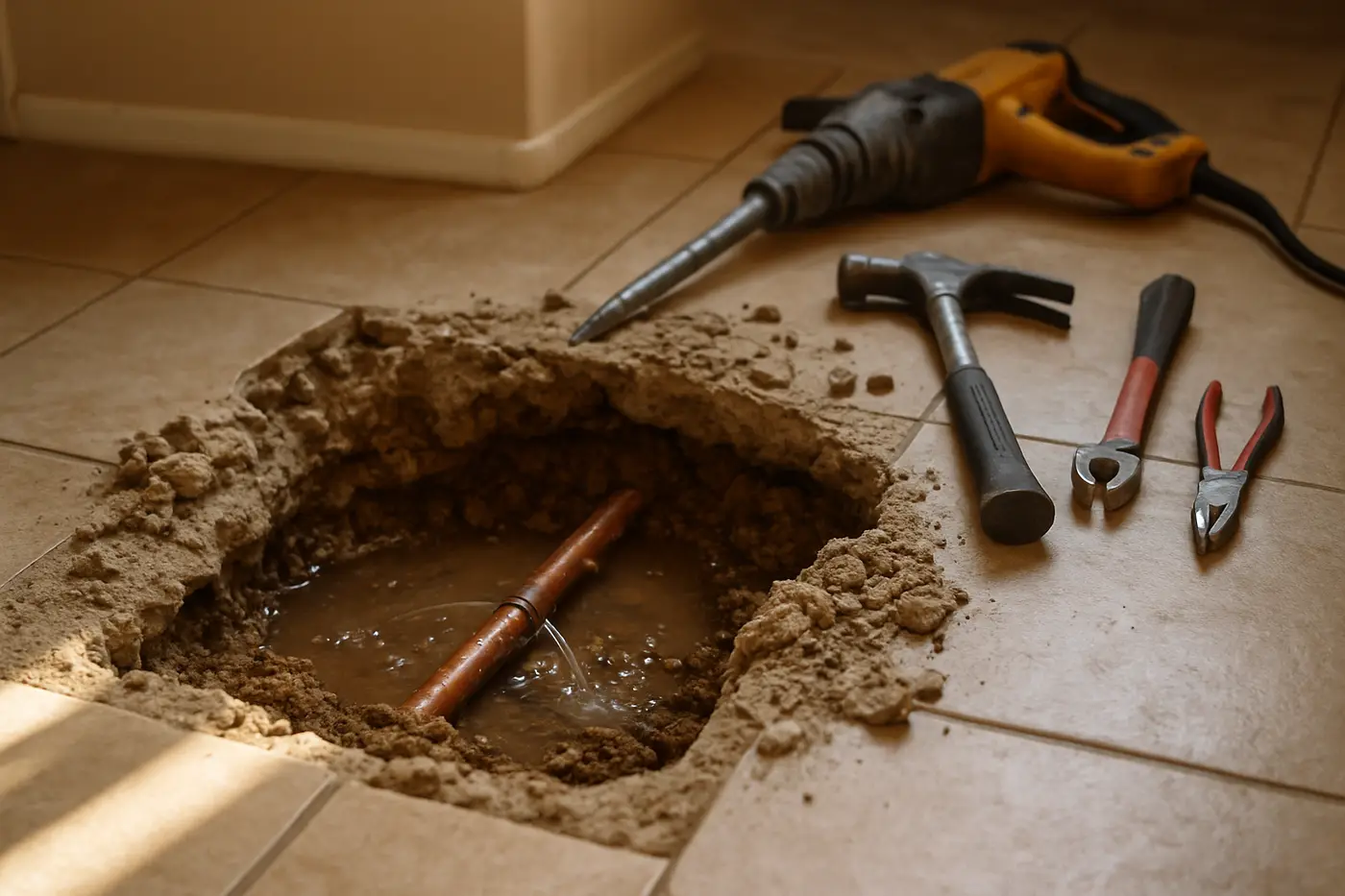
Spot repair through the slab means opening the floor covering and the concrete at the marked spot, usually with a jackhammer through a section about the size of a large tile, exposing the pipe, cutting out the failed section and replacing it, then backfilling and patching the concrete. Flooring restoration is separate. It is the right call when the leak is the first one, the copper elsewhere is sound, and the floor over the leak is something you can replace or match. It is the wrong call on a post-tension slab without locating the cables first.
Reroute means abandoning the failed line under the slab and running a new PEX or copper line overhead through the attic and down the walls to the same fixtures. The slab is never opened. It costs more per line but removes the whole run of aging copper from service, so the next pinhole on that line never happens. In a 1970s Moon Valley custom home or a 1980s Ahwatukee tract with its second slab leak, reroute is usually the smarter money.
Whole-house repipe is the reroute of every line at once. If a home has had two or more slab leaks, or has polybutylene and slab leaks together, repiping at $6,000 to $18,000 with permit and drywall access is often less than three separate emergencies. A burst pipe above the slab in the same house is another vote for it.
| Factor | Spot repair | Reroute |
|---|---|---|
| Slab opened | Yes, one spot | No |
| Typical cost | $1,500–$4,500 | $2,000–$6,000 per line |
| Flooring disturbed | At the leak | Small wall and ceiling access only |
| Remaining copper under slab | Still in service | That line retired |
| Post-tension slab | Cables must be located first | No slab risk |
| Fits when | First leak, sound copper elsewhere | Second leak, older copper, tile you cannot match |
What it costs
Typical Phoenix ranges, final price quoted on site in writing before work starts. Electronic leak detection $250 to $600. Spot repair through the slab $1,500 to $4,500 including jackhammer access, the pipe repair and the concrete patch. Reroute $2,000 to $6,000 per line. Whole-house repipe to PEX $6,000 to $18,000 for a 1,500 to 3,000 square foot home. A business-hours service call is $89 to $189, credited toward the repair; after-hours dispatch is $150 to $350 and only makes sense if water is actively damaging the house.
Insurance and permits
This is where slab leaks hurt. Standard Arizona HO-3 policies cover sudden and accidental discharge and the resulting damage, but usually exclude the pipe repair, gradual leaks, and the cost of tearing out and replacing the slab to reach the leak, unless you carry a specific endorsement. Some policies cover the resulting damage but not the access; some cover neither. Read your policy or call your agent before the work, and get the plumber’s written detection report with the location and cause; it is the document adjusters ask for. A spot repair does not require a permit. A reroute or repipe does, from the City of Phoenix Planning and Development Department or the equivalent in Scottsdale, Tempe, Mesa, Paradise Valley or Tolleson.
While you wait
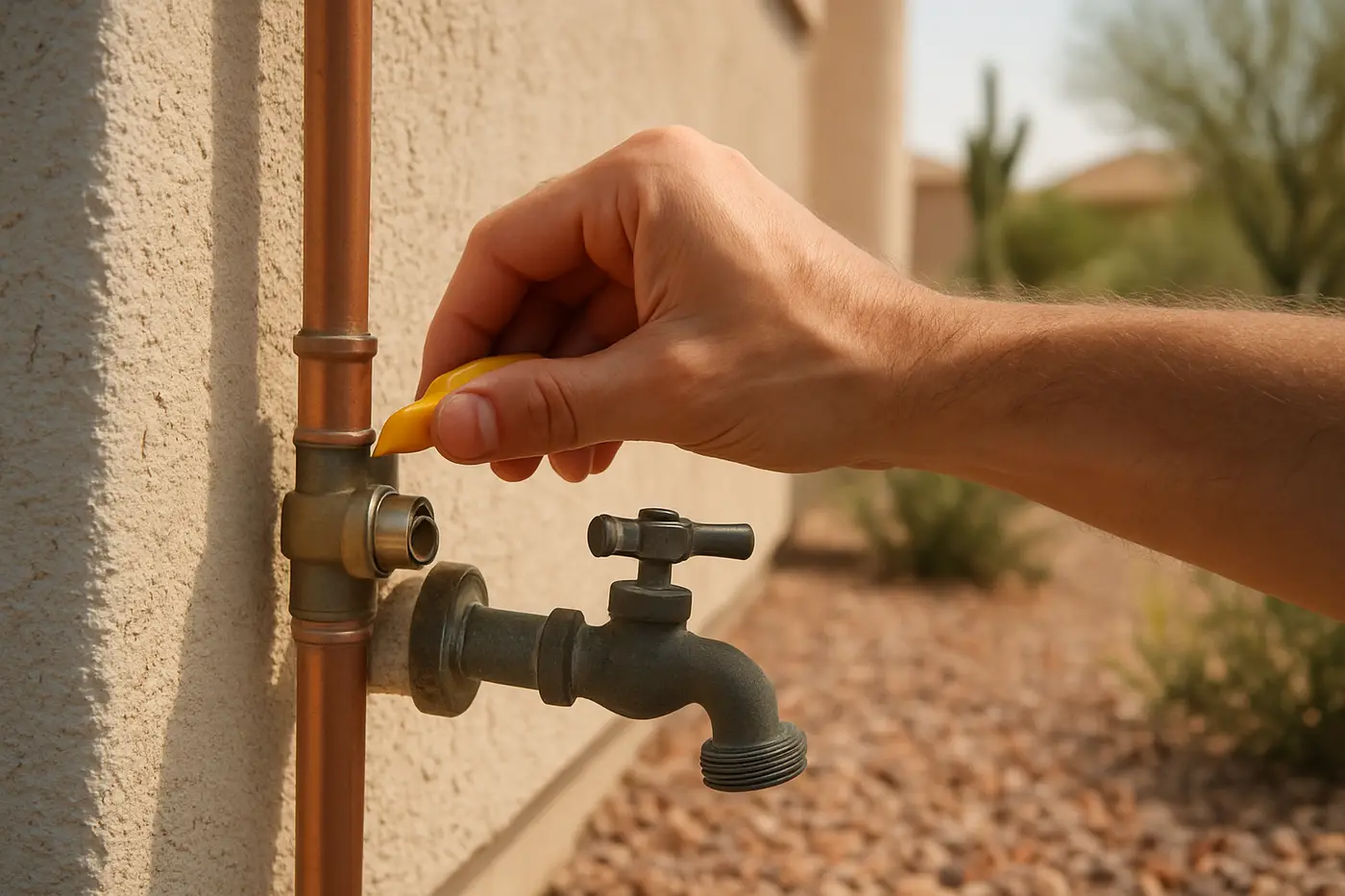
If the floor is actively wet, shut the main valve at the front of the house and open a hose bib to relieve pressure; the steps are in how to shut off the water to your Phoenix home. If only the hot side is leaking, you can shut the cold inlet on top of the water heater instead and keep cold water in the house. Keep everything electrical away from wet floors. Do not chip at the slab yourself; on a post-tension slab that is a genuine hazard. Then call or send the form with what you have seen, and you will get a detection appointment or, if water is moving fast, a dispatch fee and an honest arrival window for tonight.
Last updated September 10, 2026