In depth
Leak Detection in Phoenix: how the job actually runs.
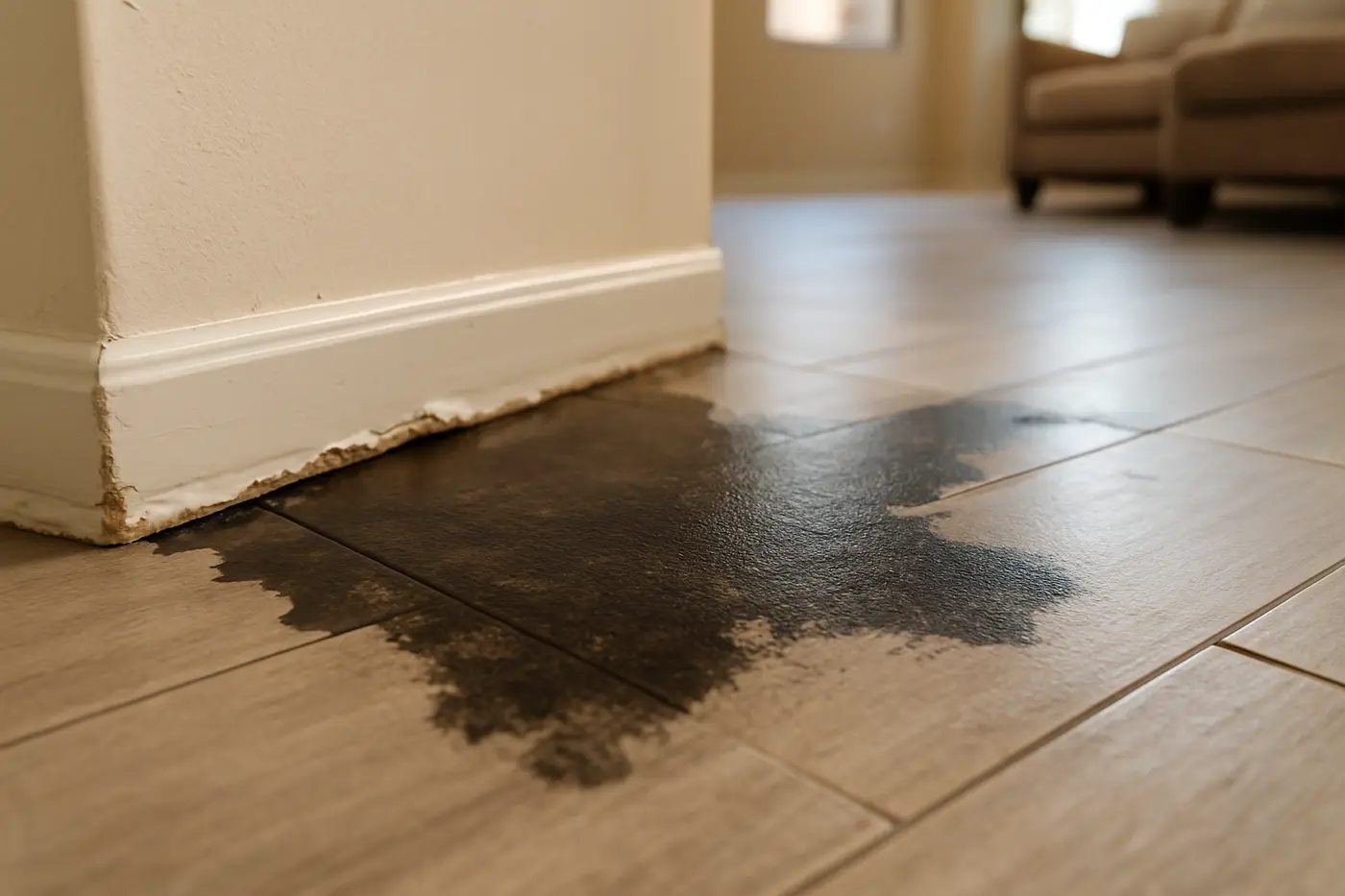
Leak detection is finding a leak you cannot see before anyone opens a wall, a floor or a yard. In Phoenix that means a meter that spins with everything off, a water bill that doubled, a warm patch on a tile floor, a wet spot in the lawn that never dries, or a pool that loses more than evaporation explains. The emergency version is when water is visibly coming through drywall or across a floor and nobody can find the source; the scheduled version is a mystery on the bill. Either way, the point is the same: one accurate hole instead of five exploratory ones.
When to call now and when to book
Now: water is coming through a ceiling or wall and you cannot find a fixture responsible; a floor is wet and spreading; the meter is spinning fast with the house shut down; you have closed the main and the household cannot go without water overnight. In those cases detection happens as part of an emergency visit and the repair follows. For leaks you can see, start at burst pipe repair.
Book at daytime rates: the meter creeps rather than spins; the bill jumped but nothing is wet; a floor is warm; the pool or irrigation loses water; a hose bib area never dries. Close the main overnight if the meter movement bothers you, and take the $89 to $189 daytime service call instead of the $150 to $350 after-hours fee. The signals worth acting on are listed in slab leak signs every Phoenix homeowner should know.
Where Phoenix leaks hide
Under the slab. Slab-on-grade foundations dominate, and copper supply lines in 1960s to 1990s homes run under the concrete. Very hard water (10 to 17 grains per gallon), abrasion at slab penetrations and electrolysis open pinholes that never show above the floor until the damage is done. Arcadia, Ahwatukee and Moon Valley homes are typical. The repair options are on our slab leak repair page.
In the walls. Polybutylene fittings in 1978 to 1995 homes, pinholes in above-slab copper, and PEX or CPVC joints behind showers. Water runs down the framing and appears at the baseboard several feet from the break.
In the yard. The service line from the meter box to the house, especially the long private runs on acre lots in Paradise Valley. Irrigation mainlines and valves, backflow preventers split by a rare freeze, and pool and spa plumbing on the many lots with pools. A wet lawn patch, a sinkhole in gravel, or unusually green desert landscaping gives it away. In Laveen and other subdivisions on former farmland, high water tables near the river bottom can mimic a leak, which is exactly why testing matters before digging.
At the fixtures. Toilet flappers that let the tank drain silently are the most common mystery leak in the Valley and cost nothing to test with food coloring in the tank, the same dye check described by EPA WaterSense. Water softener and RO drain lines, ice makers, and water heater relief valves discharging into a drain are next.
On the roof. Evaporative coolers on older homes have roof water lines that leak and float valves that stick, and monsoon ponding on flat roofs with blocked scuppers can look like a plumbing leak inside.
How detection runs
- Meter test. With every fixture off, the meter’s low-flow indicator shows whether there is a leak at all and how large.
- Isolate. The house is isolated from the irrigation and pool at their valves. The water heater is isolated at its cold inlet to split hot from cold. Toilets are dye-tested. Each step narrows the field before any equipment comes out.
- Pressure test. Hot and cold, or house and yard, are pressurized separately and watched for decay. This confirms which line has lost integrity.
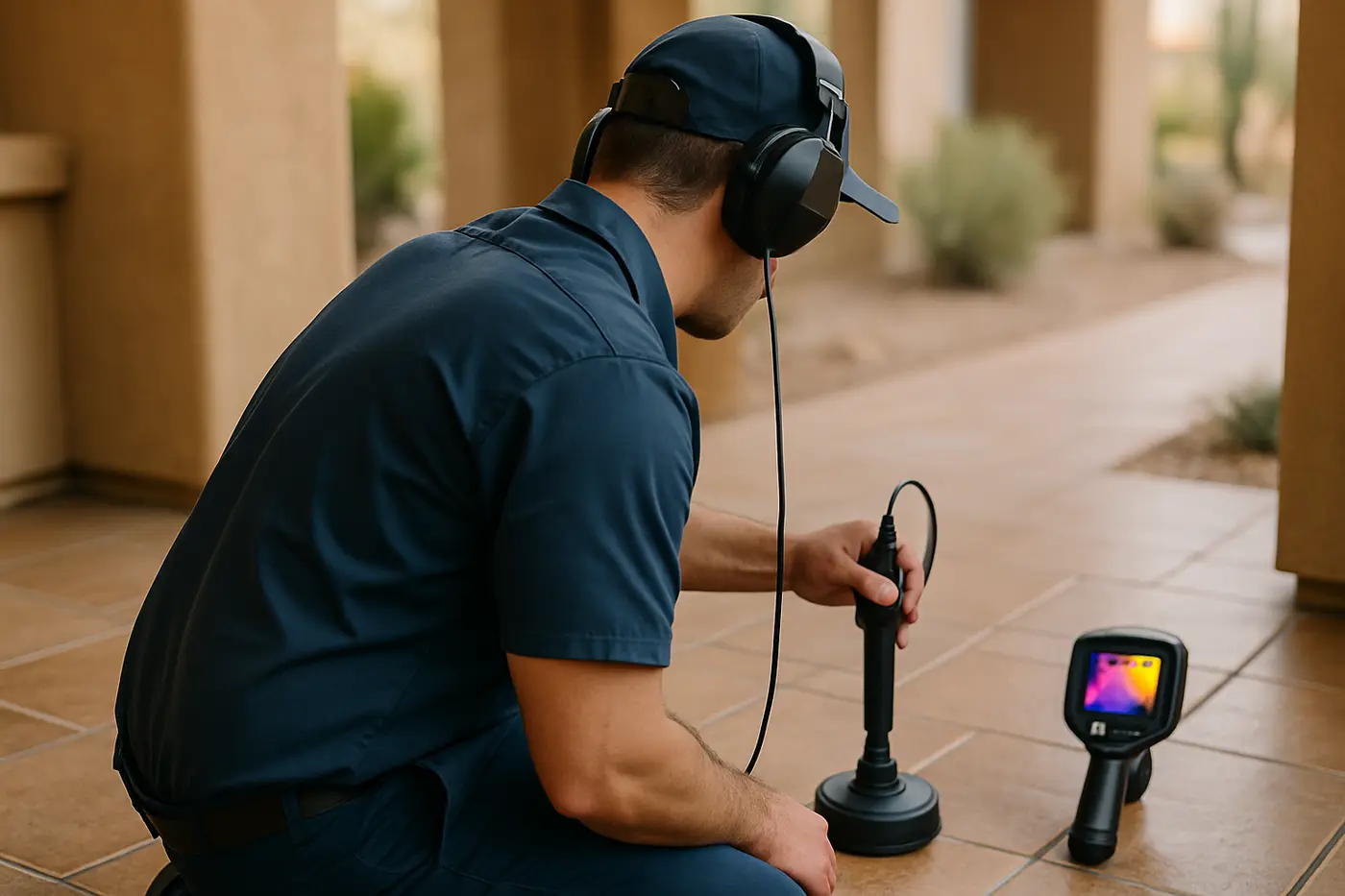
- Locate. Acoustic equipment listens for the sound of pressurized water escaping through soil or concrete. Thermal imaging picks up the warm streak of a hot-line leak through tile, or the cool evaporating patch of a cold leak in drywall. Tracer gas is introduced where the acoustic signal is weak, and a detector follows it to the surface. Moisture meters map how far the water has already traveled.
- Mark and report. The spot is marked on the floor, wall or ground, and you get a written report with location, the line affected, the likely cause, and the repair options priced in writing.
The report is the product. It tells a repair plumber where to cut, it tells your insurer what failed and when, and it lets you compare quotes for the repair on equal footing.
What it costs
Electronic leak detection is $250 to $600 in Phoenix, covering acoustic, thermal and pressure testing and the written report. When a leak is found and repaired in the same visit, the detection fee is usually part of the written quote. Typical repair ranges that follow: accessible pipe repair $250 to $1,200; slab leak spot repair $1,500 to $4,500; overhead reroute $2,000 to $6,000 per line. Yard service line and irrigation repairs are quoted after location, because depth and what is above the line decide the cost.
Detection or just start digging?
| Situation | Detect first | Go straight to repair |
|---|---|---|
| Water visibly running from a fitting or hose | Yes | |
| Wet drywall, no fixture nearby explains it | Yes | |
| Meter creeps with everything off, nothing wet | Yes | |
| Warm tile floor, higher gas or electric bill | Yes, likely a hot-side slab leak | |
| Wet patch in the yard between meter and house | Yes, to find the spot on a long run | If the leak is at the meter or hose bib |
| Pool losing more than evaporation | Yes | |
| Toilet suspected | Dye test yourself first |
Insurance, and why the report matters
Standard Arizona homeowners policies (HO-3) cover sudden and accidental discharge and the resulting damage, but exclude gradual leaks and usually exclude slab access. Whether a leak is sudden or gradual is often argued on the evidence, and a dated detection report showing when the leak was found, where, and what caused it is the strongest evidence you will have. Photograph everything before it is dried or demolished. No permit is needed for detection; a reroute or repipe that follows does need one from the City of Phoenix Planning and Development Department or the equivalent in Scottsdale, Tempe, Mesa, Paradise Valley or Tolleson.
Before we arrive
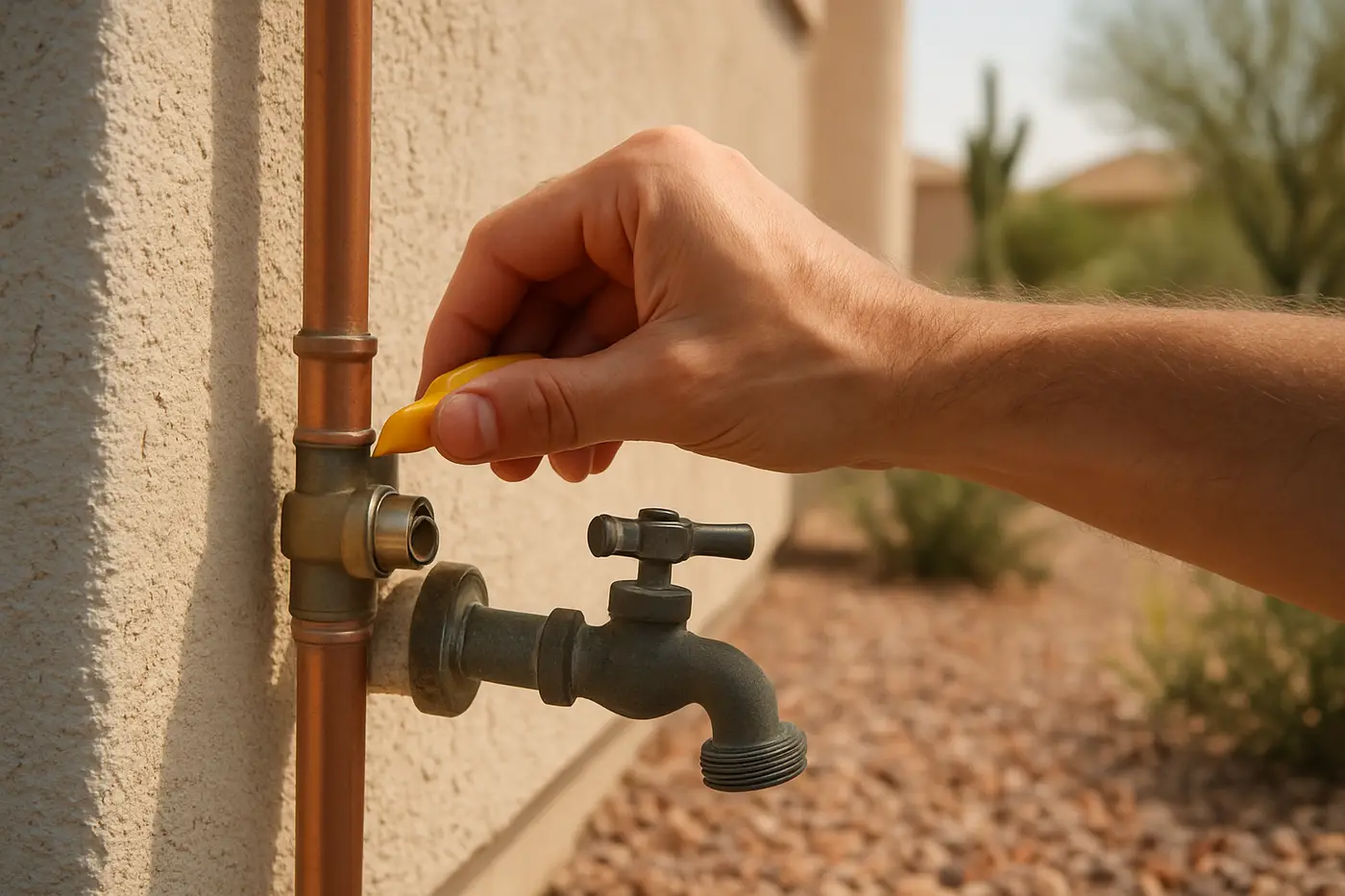
Read the meter with everything off and note whether the indicator moves. Check the toilets with dye. Walk the yard between the meter box and the house and around any irrigation valves and the pool equipment. If anything is actively wet inside, shut the main at the front of the house near the hose bib and PRV, per how to shut off the water. Then call or send the form with what you found, and you will get either a daytime detection appointment or, if water is moving, a dispatch fee and an honest arrival window.
Last updated September 16, 2026