- #burst-pipe
- #emergency-response
- #water-damage
- #insurance
- #phoenix
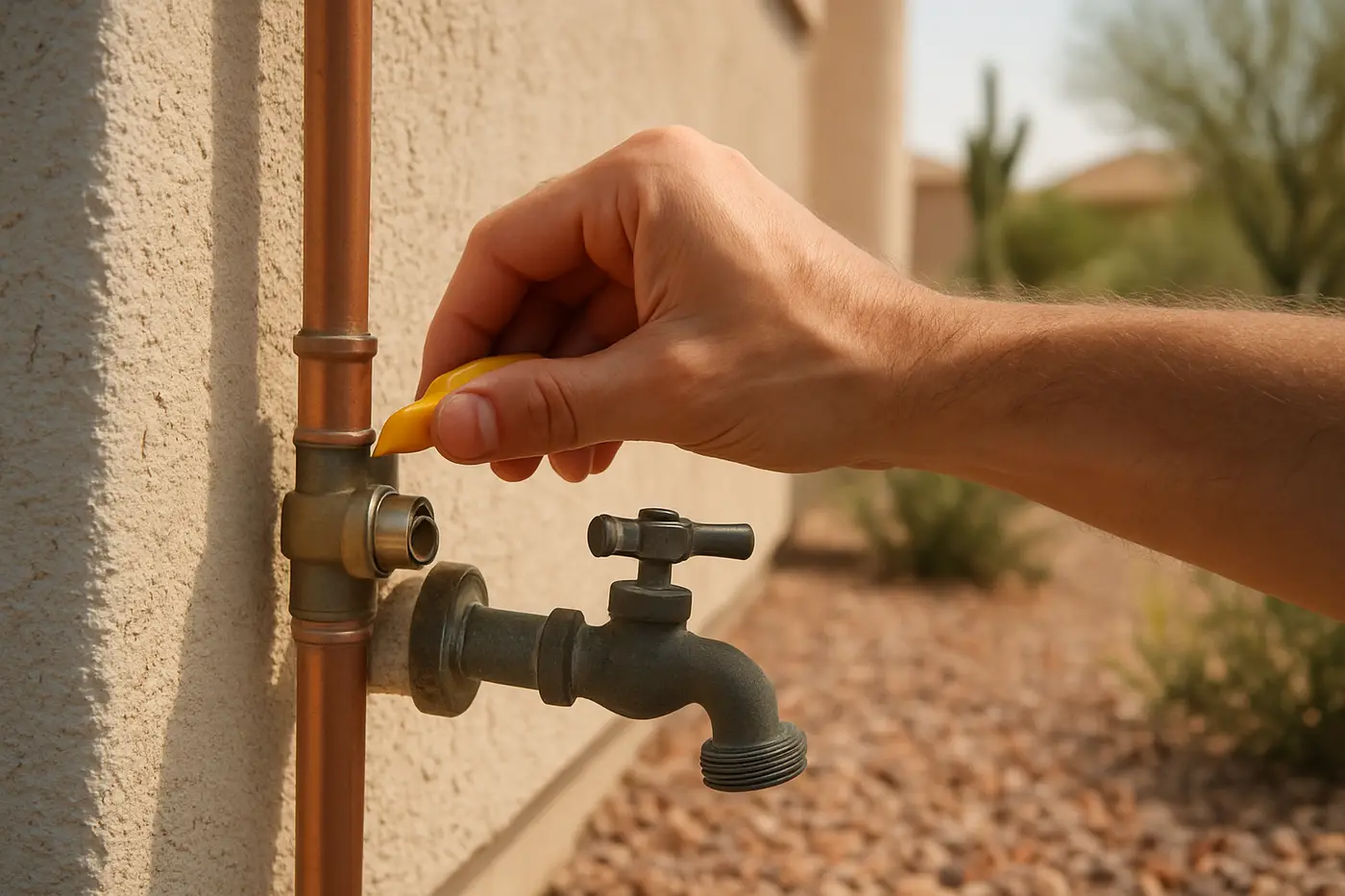
When a pipe bursts in your Phoenix home, close the main shut-off valve at the front of the house where the service line comes up out of the ground, near the front hose bib and the pressure reducing valve. Then open a faucet to drain the pressure, cut power to the wet rooms if the panel is dry and you can reach it safely, move belongings off the wet floor, photograph everything, and call a licensed plumber. If the burst is on a hot water line, also close the cold inlet on top of the water heater and turn its gas control off or switch off its breaker.
The order matters. The rest of this article explains each step, where Phoenix pipes fail, what the repair costs, and what your insurer will ask for.
The first five minutes
- Water off. Angle stop if the burst is at one fixture and you can reach it; otherwise the main at the front of the house. Lever valves turn a quarter turn across the pipe; round-wheel gate valves turn clockwise until they stop. Do not force a seized valve. If the main will not close, the meter box near the sidewalk has a city-owned valve you can close with a meter key or pliers as a last resort. Our shut-off guide shows each valve.
- Drain the pressure. Open the lowest faucet in the house and a hose bib. The flow at the burst slows to a trickle within a minute.
- Hot line? If the water was hot, close the cold inlet on the water heater and turn its gas control off or switch off its breaker. A heater on an empty tank is a heater you will be replacing.
- Power. If water reached outlets or fixtures and the panel is dry, switch off breakers to those rooms. Never step into standing water to reach the panel.
- Belongings. Rugs, boxes, anything on the floor, out of the wet area.
- Photos. Wide shots of each room, close-ups of the water line on walls and cabinets, the pipe if you can see it. Do this before you start mopping.
- Call. Describe what you saw: where the water was coming from, whether it was hot or cold, whether the main stopped it. That tells the plumber what to load on the truck.
Where Phoenix pipes burst
There is a pattern, and it follows the age of the house.
| Location | Why it fails | Which Phoenix homes |
|---|---|---|
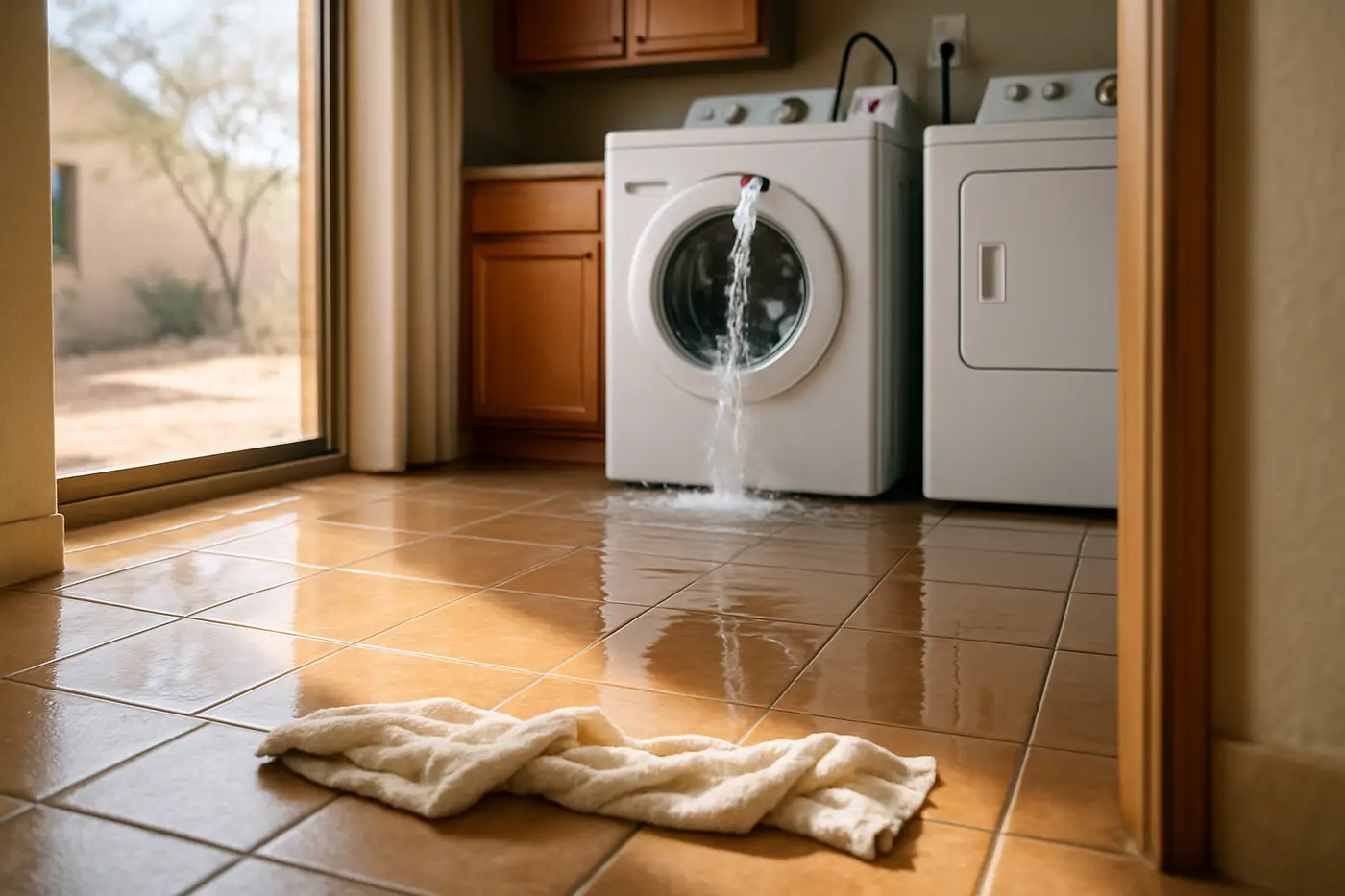
| Toilet and washing machine supply lines | Braided or plastic hoses give out under high pressure when the PRV fails | Any home, especially PEX and CPVC homes built after the mid-1990s |
| Angle stops and water heater fittings | Old multi-turn valves and dielectric nipples corrode and split | 1970s to 2000s homes, Desert Ridge and Estrella first-generation valves |
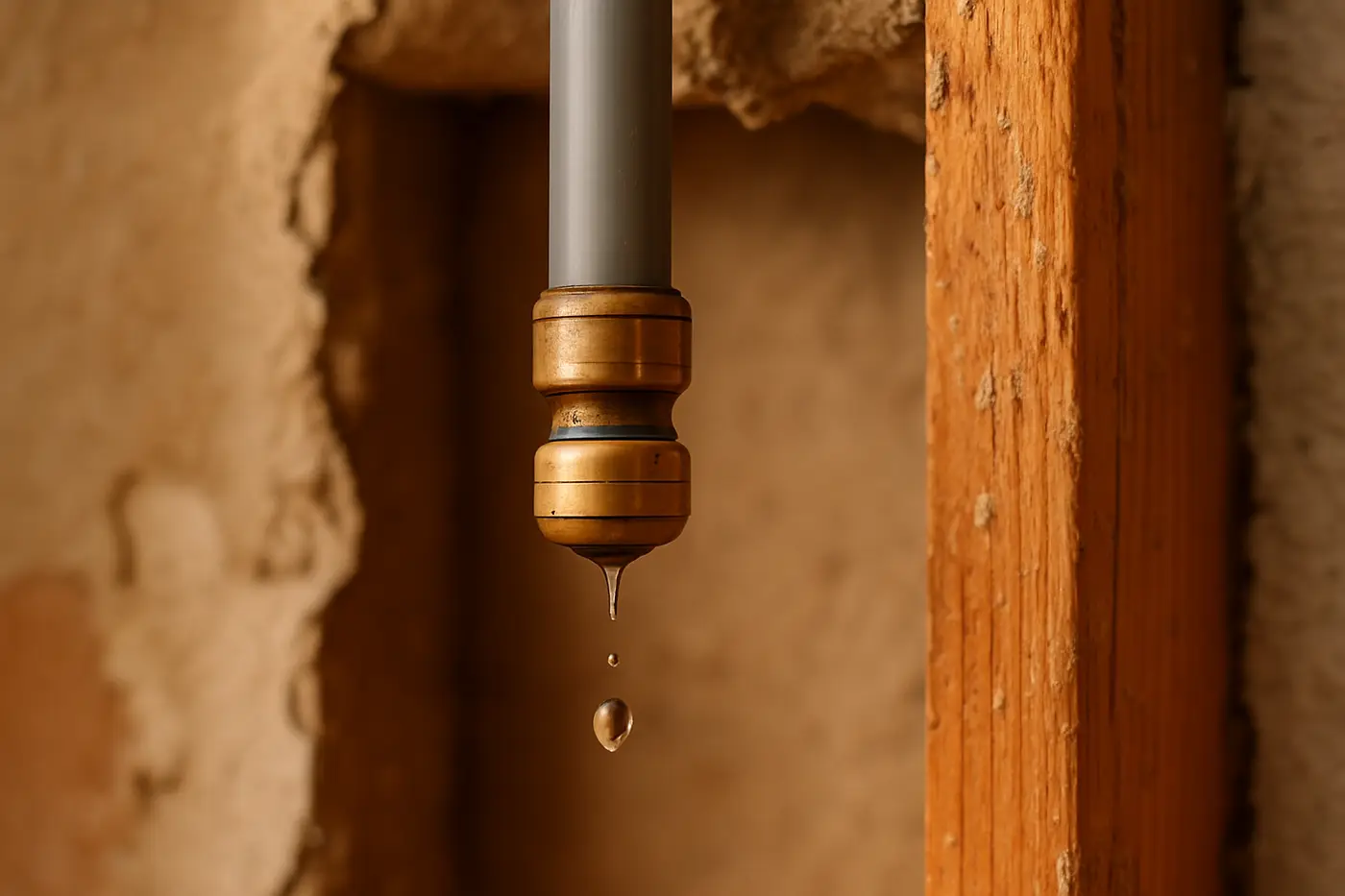
| Polybutylene fittings inside walls and ceilings | Chlorine makes the grey plastic brittle; crimp fittings let go | 1978 to 1995 homes in Biltmore, Paradise Valley Village, Moon Valley, Deer Valley, Ahwatukee |
| Galvanized steel risers and wall lines | Corrodes from the inside; threads fail | Pre-1960 homes in Willo, Coronado, older Sunnyslope, Maryvale, Alhambra |
| Copper under the slab | Pinholes, abrasion at slab penetrations, electrolysis | 1960s to 1990s homes, Arcadia and Ahwatukee especially |
| Exposed PVC and PEX outdoors | Sun and heat above 110°F make plastic brittle | Irrigation, pool lines, hose bib risers, anything on an exterior wall |
| Hose bibs, backflow preventers, garage and attic lines | Rare hard freezes, mainly December to February | Any home; the early February 2011 cold snap burst pipes across the Valley |
| Evaporative cooler water lines on the roof | Small copper or poly lines and float valves stick and split | Older homes that still run a swamp cooler |
Only one row is about cold. Phoenix pipes burst from pressure, material and heat. The PRV at the front of the house holds street pressure, which in many zones exceeds 80 psi, down to something the house can live with, and PRVs wear out after roughly 10 to 15 years. Most burst hoses and split fittings we see trace back to a PRV that quietly failed earlier.
While you wait for the plumber
With the water off, the emergency is over. Use the time well.
- Get standing water up the same day with towels, a mop or a wet-and-dry vacuum. Phoenix heat dries surfaces fast, but wall cavities, carpet pad and the underside of laminate do not.
- Open cabinets and move furniture off wet flooring so air reaches it.
- Run the air conditioning. It dehumidifies as it cools.
- Do not turn the water back on to check whether the leak has stopped. It has not.
- Do not open walls yourself. A plumber with acoustic and thermal gear opens the right spot once; a homeowner with a utility knife opens several. Our leak detection page explains how a hidden leak is found.
If the burst is in a high-rise or a shared-wall building, tell building management or the HOA now. In Downtown Phoenix towers and Midtown mid-rises, water on one floor is on the floor below within minutes, and management can isolate the riser.
What the repair involves and costs
An accessible burst pipe repair, one the plumber can reach under a sink, at the water heater or in the garage, runs $250 to $1,200 in Phoenix for a copper, PEX or galvanized section. If the pipe is inside a wall, the job includes cutting drywall for access and patching it afterward, not painting, and runs $600 to $2,500. After-hours, weekend or holiday dispatch adds $150 to $350 on top, and a straight company tells you that number before the truck moves.
Three things change the plan once the plumber sees the pipe.
- Galvanized. Cutting into a galvanized line in an older Sunnyslope or Willo home often reveals that the next joint is as bad as the one that failed. A one-foot repair can become a longer run replacement, and the plumber should say so before continuing.
- Polybutylene. A PB fitting repair fixes tonight. The rest of the system is the same age. Our polybutylene guide explains the repipe decision.
- A failed PRV. If pressure is what burst the pipe, fixing the pipe without replacing the PRV, $350 to $900, sets up the next failure.
Sometimes the right move at 1 a.m. is a cap on the line and a return in daylight with parts; that is usually the cheaper path. The burst pipe repair page covers what is included, and the 24 hour emergency plumber page explains how we decide what needs to happen tonight.
Insurance: what to keep and what to say
A standard Arizona HO-3 policy treats a burst pipe, a failed supply hose or a ruptured water heater as sudden and accidental discharge, and it covers the resulting damage to floors, drywall, cabinets and contents. It usually does not cover repairing the pipe itself, and it excludes gradual leaks.
To keep the claim simple:
- Photograph before cleanup, and again as walls or flooring come up.
- Keep the failed part. A split hose, a cracked fitting, a section of corroded pipe. The adjuster may want to see it.
- Ask the plumber for a written report that describes what failed and calls it sudden.
- Keep every receipt, including the dispatch fee.
Water from outside the house, monsoon runoff through a garage door for instance, is flood and is a different policy.
Preventing the next one
- Find and test the main shut-off and every angle stop once a year. Replace the ones that seize or leak while it is a daytime job.
- Check the PRV age. Past 10 to 15 years, replace it.
- Replace plastic or rubber toilet and washing machine supply lines with braided stainless.
- If the home is 1978 to 1995 with grey plastic supply, plan a repipe.
- Insulate or cover exposed hose bibs, backflow preventers and garage or attic lines before a forecast freeze in December through February.
- Shade or sleeve exposed PVC and PEX outdoors.
- Close the main when you leave town for more than a day or two.
Key takeaways
- Main valve at the front of the house first, then drain a faucet, then power, then photos, then the call.
- Phoenix pipes burst from pressure, material and heat, not cold; a failed PRV is behind most of them.
- Accessible repairs run $250 to $1,200; behind drywall $600 to $2,500; after-hours dispatch adds $150 to $350.
- Keep the failed part, photograph before cleanup and get a written report; insurance covers damage, not the pipe.
- Replace a worn PRV and old supply hoses now.