- #water-heater
- #hard-water
- #sediment
- #expansion-tank
- #phoenix
- #tankless
Water heaters fail faster in Phoenix because the municipal water is very hard, commonly 10 to 17 grains per gallon, and every heating cycle drops scale out of that water into the bottom of the tank, where it insulates the steel from the burner, forces the unit to run longer and hotter, and eventually rusts the tank through. On top of that, most Phoenix water heaters sit in garages, utility closets or outdoor closets where summer air runs above 110°F, which stresses fittings, relief valves and expansion tanks. Tank units here commonly last 8 to 12 years, and a unit with no maintenance history lands at the short end.
Below is what hard water and heat do inside the tank, the warning signs in the order they appear, 2026 repair and replacement costs, and the maintenance that makes a real difference.
What hard water does inside the tank
Phoenix water is a blend of Salt River, Verde River and Central Arizona Project Colorado River water, and depending on the mix it carries 10 to 17 grains of dissolved minerals per gallon. Anything above 10.5 is classed very hard.
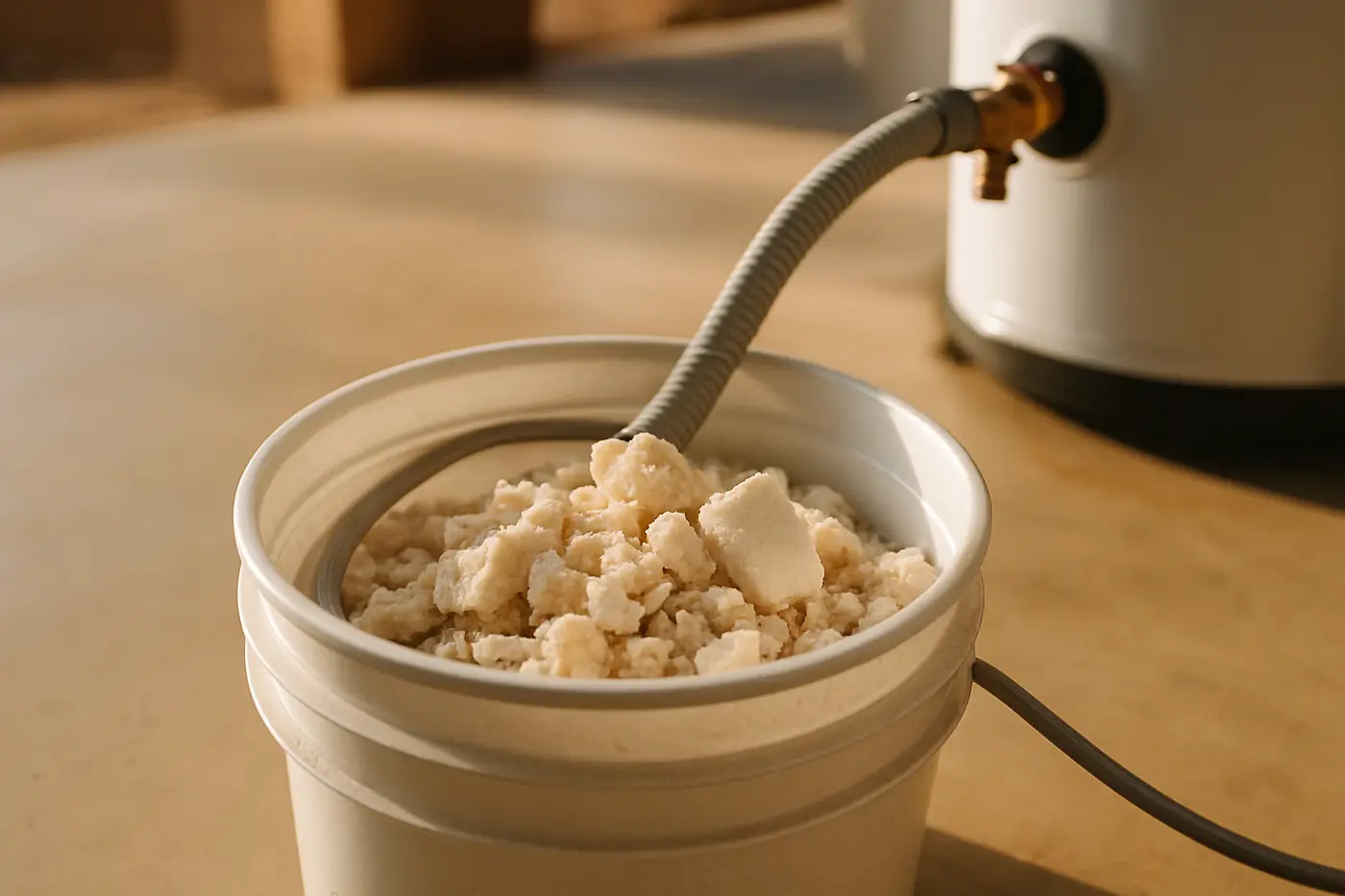
When that water is heated, the minerals come out of solution and settle as sediment on the bottom of the tank. In a gas unit that layer sits between the burner and the water, so the burner heats rock before it heats water, the unit runs longer, the steel at the bottom gets hotter than it was designed for, and the glass lining cracks. Water trapped under the sediment boils and pops up through it, which is the rumbling you hear. In an electric unit the sediment buries the lower element, which burns out.
The same scale collects in faucet aerators, shower valves and the fill valves in toilets. If you are cleaning white crust off fixtures every few months, the inside of your water heater looks worse.
What the heat does
Phoenix water heaters live in the garage, a utility closet or an outdoor closet, and in summer that air is routinely above 110°F; the all-time record here is 122°F.
Heat does three things to a water heater.
- Thermal expansion gets worse. Incoming water is already warm from the service line, the tank is in a hot room, and when the heater fires the water expands. Most Phoenix homes are closed systems because of the PRV or a backflow device, so that expansion has nowhere to go except into the pressure at every fitting. A thermal expansion tank is required with a closed system to absorb it, and expansion tanks themselves fail under repeated heat cycling.
- Valves and fittings age faster. The temperature and pressure relief valve, the drain valve, the dielectric nipples and the flex connectors are all working harder in a hot garage.
- PRVs fail. Pressure reducing valves wear out after roughly 10 to 15 years, and when one fails, street pressure often above 80 psi hits the heater directly. Failed PRVs are behind many burst heater fittings, washing machine hoses and toilet supply lines.
Warning signs, in the order they usually show up
| Sign | Likely cause | What to do |
|---|---|---|
| White scale on aerators and shower heads | Very hard water; the tank has it worse | Flush the tank annually; consider a softener |
| Popping, rumbling or crackling when the burner runs | Sediment layer boiling | Flush; if the unit is past ten years, plan replacement |
| Hot water runs out faster than it used to | Sediment taking up tank volume, or a failed lower element | Flush; test elements on electric units |
| Relief valve drips after the heater cycles | Thermal expansion with a missing or failed expansion tank | Replace the expansion tank; check PRV |
| Rusty or brown hot water only | Tank lining failing | Replacement is close |
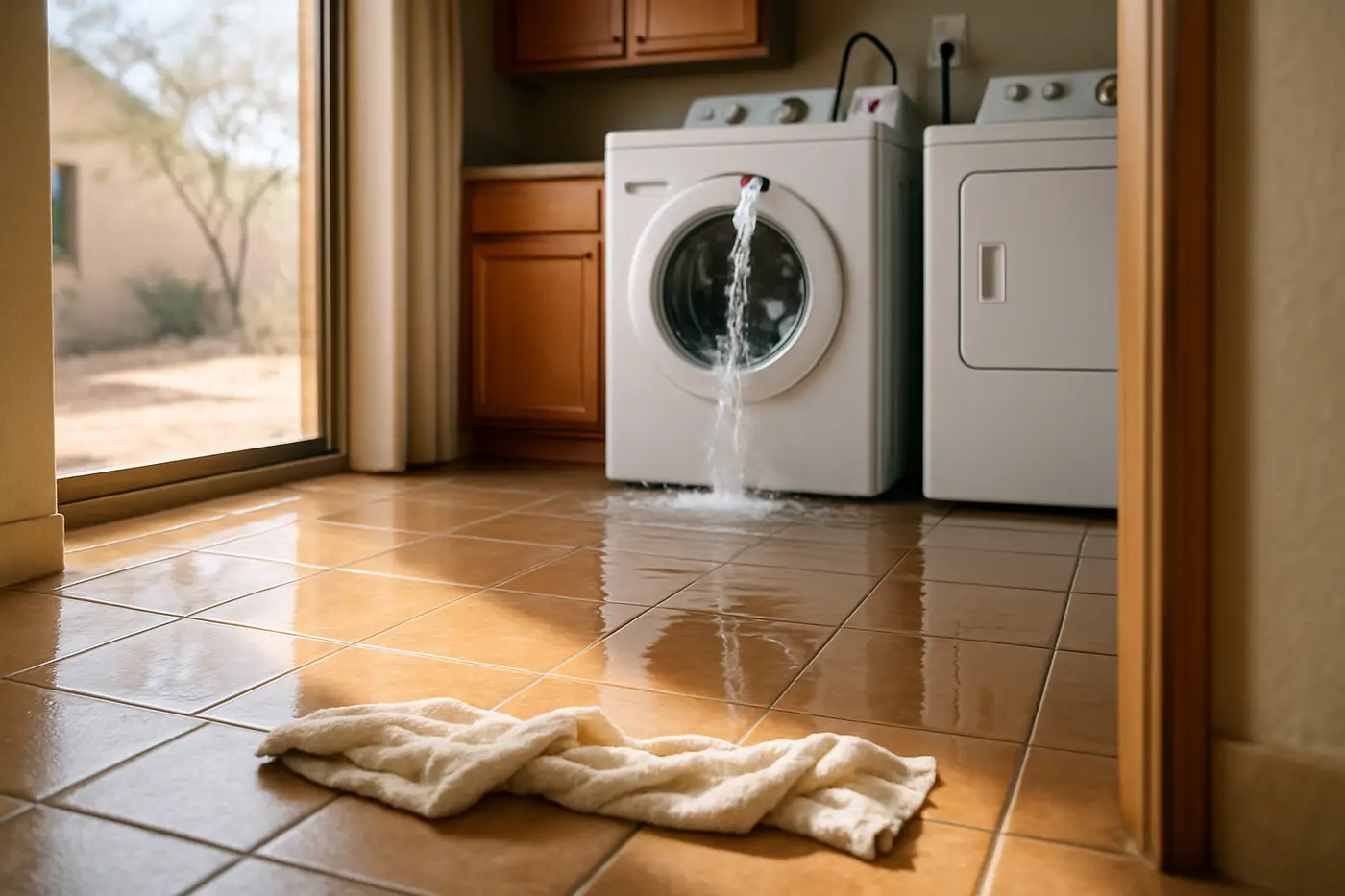
| Water at the base of the heater | Fitting leak, relief valve, or the tank itself | Close the cold inlet; a tank leak means replacement |
| Pilot will not stay lit | Thermocouple or gas valve | Repair, $150 to $700 |
| Higher gas or electric bill with no other change | Sediment insulating the heat source | Flush; evaluate age |
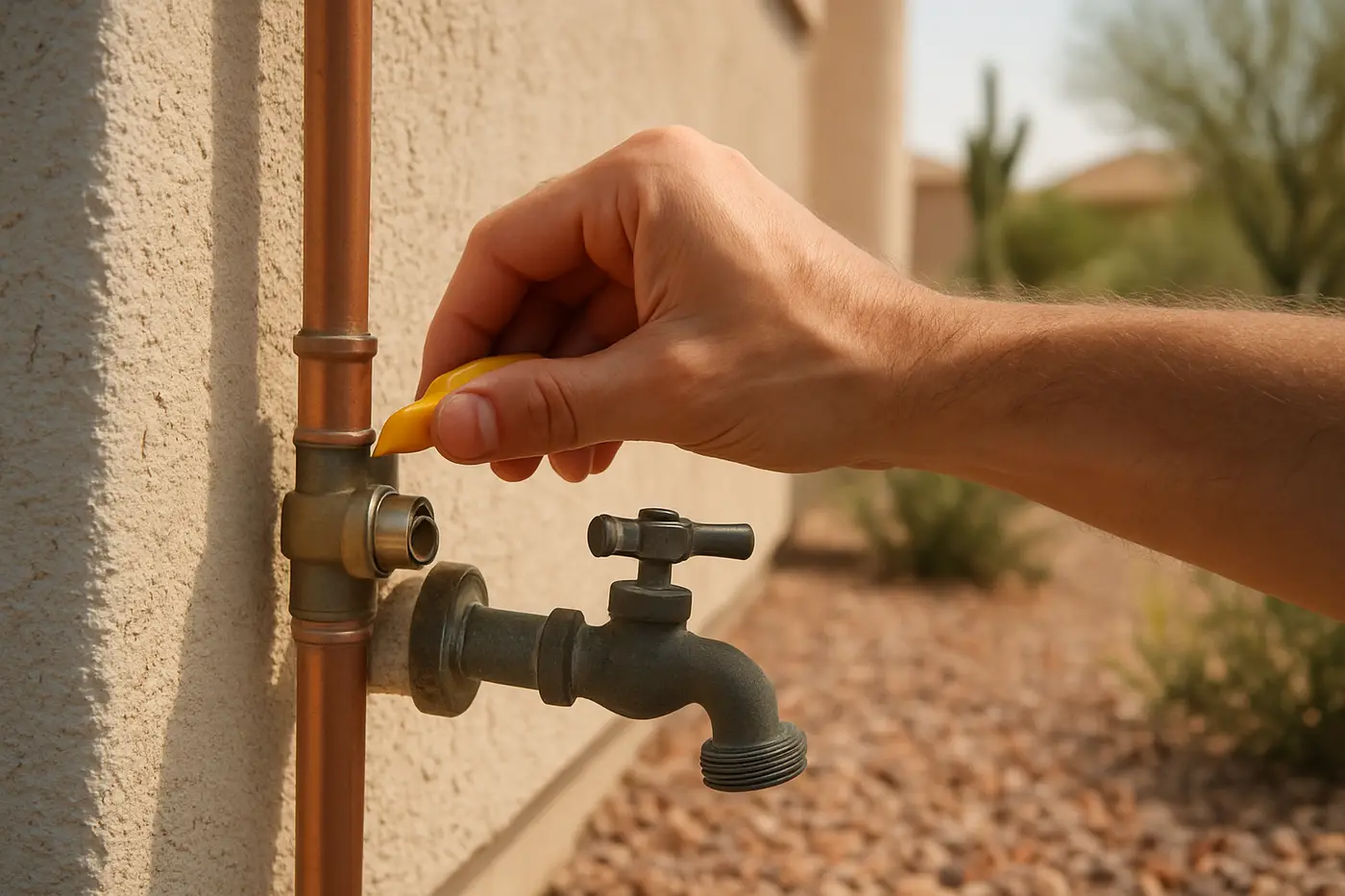
Rusty hot water and water at the base are the two that mean stop reading and act. If the tank itself is leaking, close the cold inlet valve on top, turn the gas control to off or switch off the breaker, and call. Our shut-off guide covers the water heater valves step by step.
Repair or replace
Repair, $150 to $700. Thermostats, heating elements, gas control valves, thermocouples and relief valves are all replaceable parts, and on a unit under about eight years old they are usually worth replacing. Before any work, check the contractor’s license with the Arizona Registrar of Contractors. A heater that is not heating but is not leaking is a daytime job at daytime rates, not an emergency.
Replace, $1,400 to $3,500 for a 40 to 50 gallon tank. The tank itself is never repairable. Once rust is through the steel, the unit is done. A complete Phoenix replacement quote includes the heater, removal of the old one, a permit from the City of Phoenix Planning and Development Department or your city’s equivalent, a thermal expansion tank, and whatever code upgrades the inspection requires: venting, gas connector, drain pan. A quote well under the range is usually missing the permit and the expansion tank, the two things that keep the next heater from failing early.
Tankless, $3,000 to $6,500. Tankless units save garage space and have no tank to rust. Gas line and venting upgrades drive the price, and our gas line repair page covers what that work involves. The trade-off in Phoenix is scale: the heat exchanger collects it the same way a tank does, so a tankless unit here needs regular descaling or a softener ahead of it.
The water heater repair page lists what is included in each option, and the 2026 cost guide explains how after-hours timing and permits move the price.
Maintenance that actually helps
Not every tip you read makes a difference. These do.
- Flush the tank once a year. Connect a hose to the drain valve, run it outside, close the cold inlet, open a hot faucet inside, and drain until the water runs clear. If the drain valve clogs, the sediment is packed and a plumber can sometimes clear it.
- Test the relief valve. Lift the lever briefly and let it snap back. If it does not reseat and drips, replace it.
- Check the expansion tank. Tap it. A healthy expansion tank sounds hollow on top; a waterlogged one sounds solid and needs replacing.
- Check the PRV age. If it is past 10 to 15 years, replace it, $350 to $900. It protects the heater and everything else.
- Consider a softener. Water softener installation runs $1,500 to $4,000 in Phoenix. It is the only thing that addresses the hardness itself rather than its symptoms, and it extends the life of the heater, fixtures, valves and appliances.
- Keep the area clear. A gas heater needs combustion air.
Where it shows up
First-generation water heaters and PRVs in the 1990s to 2010s homes of Desert Ridge are reaching end of life together, which is why we see both fail on the same call there. Multi-unit buildings in the Biltmore area put heaters in closets where a tank leak reaches a neighbor’s unit before anyone notices. Estrella adds heavy silt to the hard water, which packs sediment faster.
If it is leaking right now
- Close the cold inlet valve on top of the heater.
- Gas unit: turn the control knob to off. If the tank is leaking, close the gas shut-off on the supply pipe too. Electric unit: switch off its breaker.
- Do not try to relight or touch gas connections. If you smell gas, leave the building, call the gas utility’s emergency line, then a licensed plumber.
- Move belongings off the wet floor and photograph the heater, the puddle and the data plate showing the manufacture date.
- Call. A tank leak with the water off is usually a next-morning replacement, not a midnight one, unless the water is still coming.
Key takeaways
- Very hard water at 10 to 17 grains per gallon fills the tank with sediment; that is why Phoenix heaters last 8 to 12 years.
- Garage heat above 110°F worsens thermal expansion and ages every valve and fitting on the unit.
- Popping noises and short hot water are sediment; rusty hot water and a wet base mean the tank is failing.
- Repairs are $150 to $700; a permitted tank replacement with expansion tank runs $1,400 to $3,500.
- Annual flushing, a working expansion tank, a PRV under 15 years old and, ideally, a softener are what change the outcome.