- #slab-leak
- #leak-detection
- #copper-pipe
- #phoenix
- #foundation
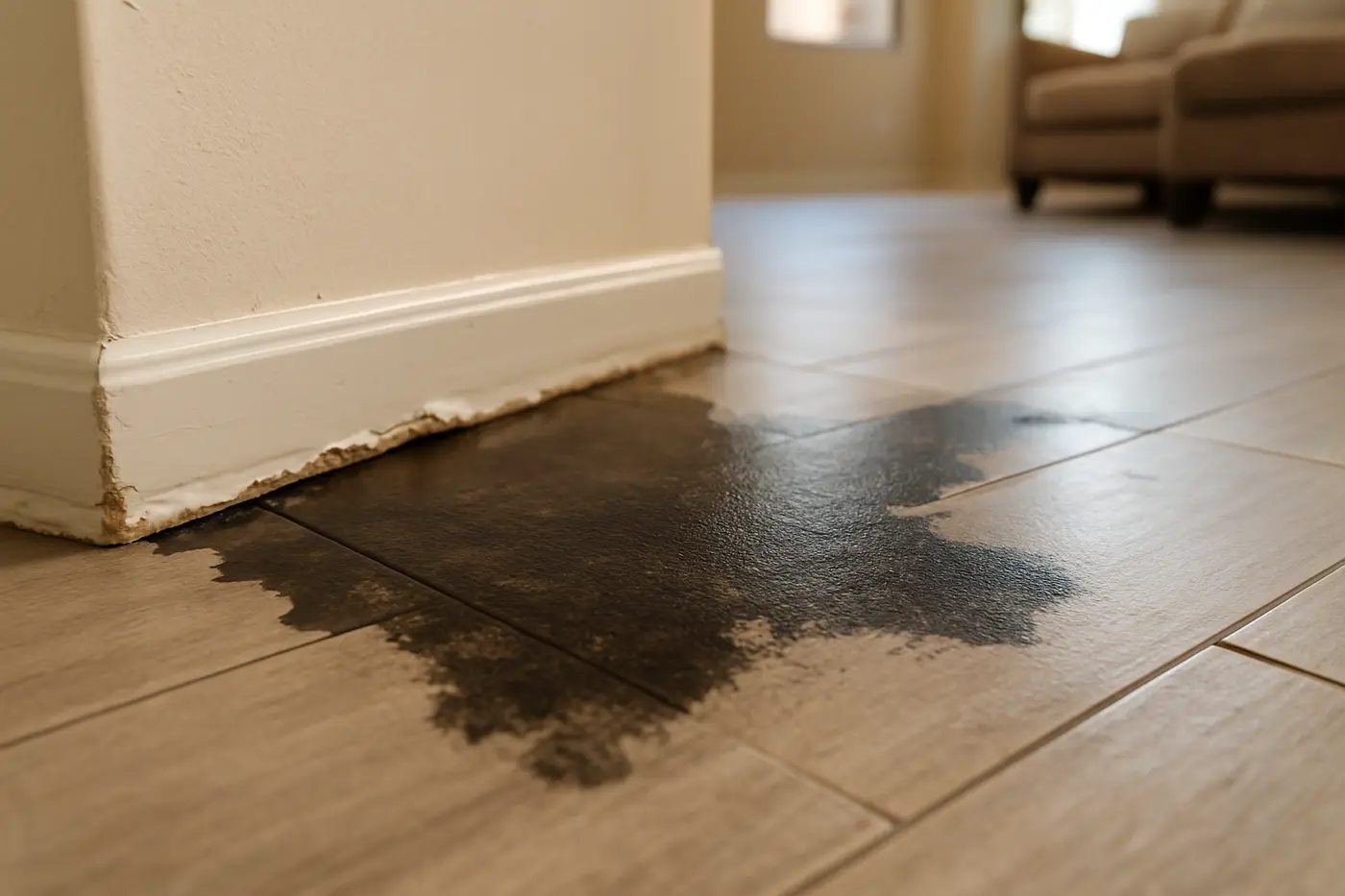
The slab leak signs Phoenix homeowners notice first are a water bill that climbs without a change in habits, a warm spot on a tile or concrete floor, the sound of running water when every fixture is off, damp or discolored baseboards, flooring that buckles or lifts, a drop in hot water pressure, and a water heater that seems to run constantly. Homes built from the 1960s through the 1990s with copper supply lines under the slab are the most likely to have one, and most slab leaks here are on the hot water side.
If two or more of those describe your house, run the meter test below, then book leak detection. The rest of this article explains why Phoenix has so many slab leaks and what the repair choices cost in 2026.
Why Phoenix is slab-leak country
Nearly every home in the Valley sits on a slab-on-grade foundation with no basement, so builders from the 1960s into the 1990s laid copper supply lines beneath or in the concrete. That copper is now decades old, and four local conditions work against it.
- Hard water. Phoenix municipal water runs 10 to 17 grains per gallon depending on the blend of Salt River, Verde River and Colorado River water, which is classed very hard and contributes to pinhole leaks in older copper.
- High pressure. Many Phoenix zones deliver street pressure above 80 psi. PRVs wear out after roughly 10 to 15 years, and a failed PRV puts full street pressure on every buried joint.
- Abrasion and electrolysis. Copper rubs against concrete where it passes through the slab as it expands and contracts with hot water, and where it sits in soil, electrolysis eats it from the outside.
- Wet soil. Flood-irrigated lots in Arcadia, Laveen and parts of Central Phoenix keep the ground around foundations damp, which speeds corrosion and hides leaks.
Homes built from the 1990s on more often use PEX or CPVC, but many sit on post-tension slabs, which matters when choosing a repair.
The seven signs, and what each one tells you
| Sign | What is happening | Hot or cold line | How urgent |
|---|---|---|---|
| Water bill up with no change in use | Water is escaping somewhere between meter and fixtures | Either | Test this week |
| Warm spot on the floor | Hot water is heating the slab from below | Hot | Book detection |
| Sound of running water, everything off | Pressurized water is escaping under the slab | Either | Book detection |
| Damp baseboards, musty smell, stained drywall low on a wall | Water is wicking up from the slab into framing | Either | Book detection |
| Buckling laminate, lifting tile, soft spots in flooring | Moisture under the flooring for weeks | Either | Book detection |
| Hot water pressure lower than cold | The hot line has a leak or restriction | Hot | Book detection |
| Water heater runs constantly or runs out fast | It is heating water that leaves through the leak | Hot | Book detection |
| Water surfacing through the floor or at the slab edge | Leak has saturated the soil | Either | Emergency |
The five-minute meter test
You can confirm that water is moving before you spend anything on detection. The EPA WaterSense program explains how household leaks show up on a meter.
- Make sure nothing is using water: no dishwasher, washing machine, ice maker or irrigation timer. Close the angle stops on every toilet, since a slow fill is the most common false positive.
- Lift the meter box lid in the front yard near the sidewalk. Look for the small low-flow indicator on the meter face, or note the exact reading.
- Watch for a few minutes. If the indicator turns or the reading climbs, water is leaving the system somewhere.
- Now close the cold inlet valve on top of the water heater and watch again. If the movement stops, the leak is on the hot side, which is the usual case for slab leaks. If it continues, the leak is on the cold side or the main.
- Finally, close the house main valve at the front of the house. If the meter still moves, the leak is in the service line between the meter and the house, not under the slab.
Write down what you saw; a plumber who arrives knowing the leak is hot side and stops at the main starts in the right place. If you are not sure where those valves are, our guide to shutting off the water to your Phoenix home shows each one.
How professional leak detection works
Electronic leak detection runs $250 to $600 in Phoenix and is usually credited toward the repair if the same company does the work. The plumber isolates hot and cold sides, pressure-tests each, then uses acoustic equipment to hear the leak through the slab and thermal imaging to see the warm plume on the floor. The output is a marked spot and a recommendation; our leak detection page describes the process. Detection before repair matters because a jackhammer opens the floor once, and guessing wrong costs a second hole.
Neighborhoods where we see the most slab leaks
The pattern follows the housing stock. The 1950s and 1960s ranch homes in Arcadia combine copper under the slab, flood irrigation and large remodels that added bathrooms to old lines. Ahwatukee has 1970s to 1990s homes with copper slab lines and, in the 1980s tracts, polybutylene too. Moon Valley, Paradise Valley Village and Biltmore fall into the same copper era. Older Sunnyslope, Maryvale and the historic districts have galvanized steel, which fails in walls and at the riser more often than under the slab.
Repair choices and what they cost
Once the leak is located there are three honest options, and the right one depends on the slab type, the rest of the line, and how many leaks the house has had.
Spot repair through the slab: $1,500 to $4,500. The plumber cuts the flooring, jackhammers a small opening, repairs the section, tests it and patches the concrete; flooring replacement is separate. This suits a first leak on a conventional slab when the rest of the line tests sound.
Reroute overhead: $2,000 to $6,000 per line. The leaking line is abandoned under the slab and a new PEX or copper line runs through the attic and down a wall to the fixtures it fed. This avoids opening the slab, which is preferred on post-tension slabs, where cutting concrete risks the tension cables, and on homes with a previous slab leak.
Whole-house repipe: $6,000 to $18,000. For a 1,500 to 3,000 square foot home, every supply line is replaced with PEX, with a permit from the City of Phoenix Planning and Development Department and drywall access that is patched but not painted. This is the answer for a home on its second or third slab leak or with copper failing in the walls too.
See the slab leak repair page for what is included in each, and the 2026 emergency plumber cost guide for how access and slab work move a price.
Insurance: what to expect
A standard Arizona HO-3 homeowners policy covers sudden and accidental water discharge and the damage it causes. It usually excludes the cost of fixing the pipe itself, excludes gradual leaks, and excludes slab access unless the policy has a specific endorsement. Since slab leaks are often gradual, the paperwork decides the claim. Keep the detection report, the written quote, dated photos before repair, and the removed section of pipe. Ask the plumber for a written statement describing the failure.
What to do this week if you suspect a leak
- Run the meter test and note whether the leak is hot or cold side.
- If it is hot side, close the water heater cold inlet overnight to slow the loss while you wait for detection.
- Photograph any warm, damp or lifted flooring now.
- If the PRV is past 10 to 15 years, plan to replace it ($350 to $900) when the leak is fixed.
- Book leak detection during business hours; unless water is surfacing or only the main stops it, this is not a midnight call.
Key takeaways
- The first signs are a higher water bill and a warm spot on the floor; most Phoenix slab leaks are on the hot line.
- Copper under slab in 1960s to 1990s homes, very hard water, high pressure and wet soil are why the Valley has so many.
- The meter test tells you whether water is moving and whether it is hot or cold side before you spend anything.
- Spot repair, reroute or repipe: post-tension slabs and repeat leaks push toward reroute or repipe.
- Document everything; insurance usually pays for damage, not the pipe or the slab access.