- #polybutylene
- #repipe
- #pex
- #phoenix
- #leaks-pipes
- #pipe-materials
If your Phoenix home was built between roughly 1978 and 1995 and the supply pipe you can see under the sinks or at the water heater is dull grey plastic, it is polybutylene, and the right move is to confirm it, replace a worn pressure reducing valve to take stress off the pipe, budget for a whole-house repipe to PEX or copper at $6,000 to $18,000 for a 1,500 to 3,000 square foot home, and make sure everyone in the house knows where the main shut-off is until the repipe is done. Spot repairs buy time. They do not fix the material.
This article explains how to identify polybutylene, why it fails the way it does in Phoenix water, which neighborhoods have the most of it, and how to decide between patching and repiping.
How to identify polybutylene
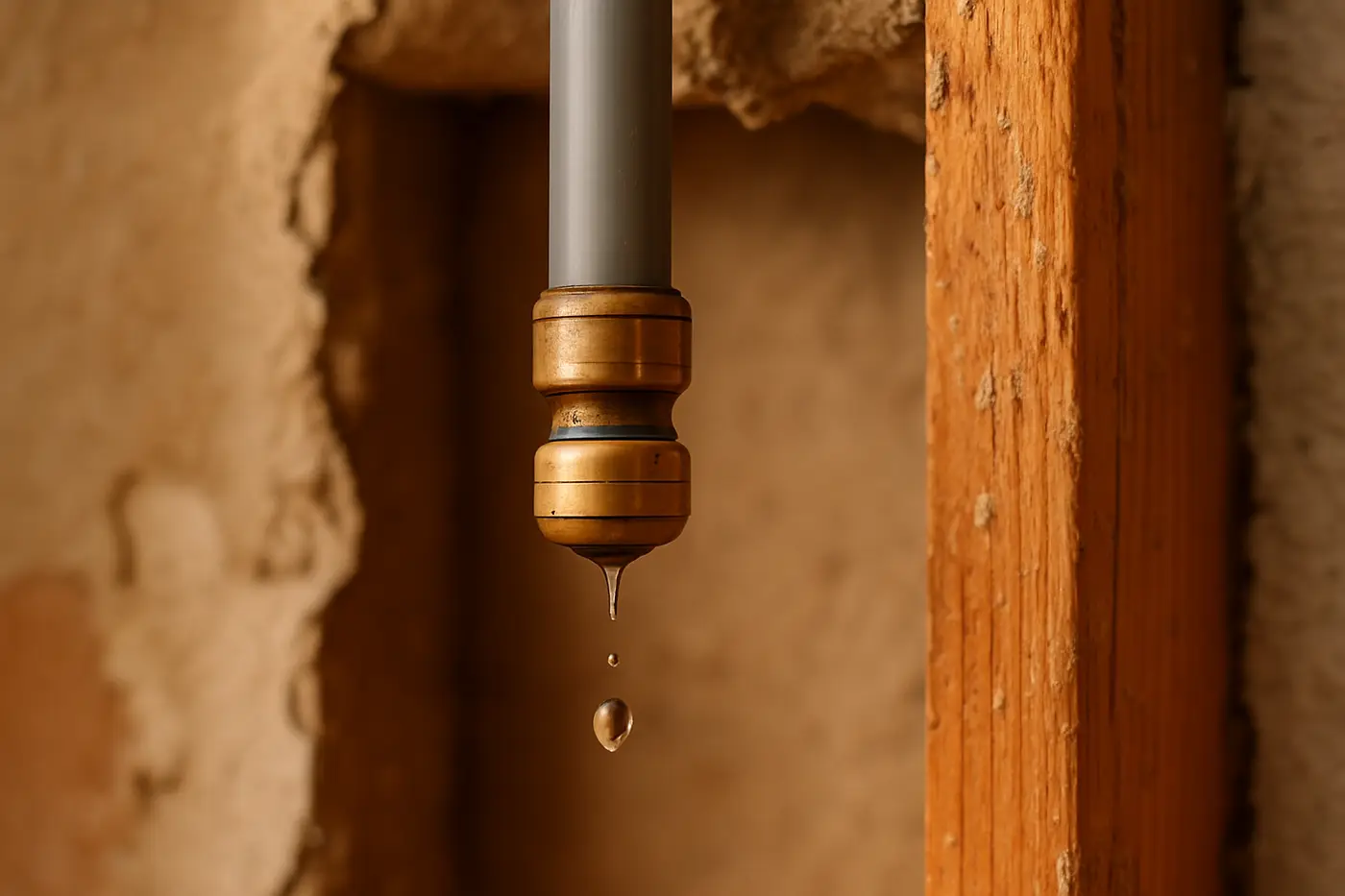
Polybutylene, usually shortened to PB, is a grey, slightly flexible plastic supply pipe about the same diameter as copper. It is joined with crimp fittings, either metal or plastic, rather than soldered joints. You will find it in four places if your house has it:
- Under kitchen and bathroom sinks, where the supply comes out of the wall to the angle stop.
- At the water heater, on the cold inlet and hot outlet.
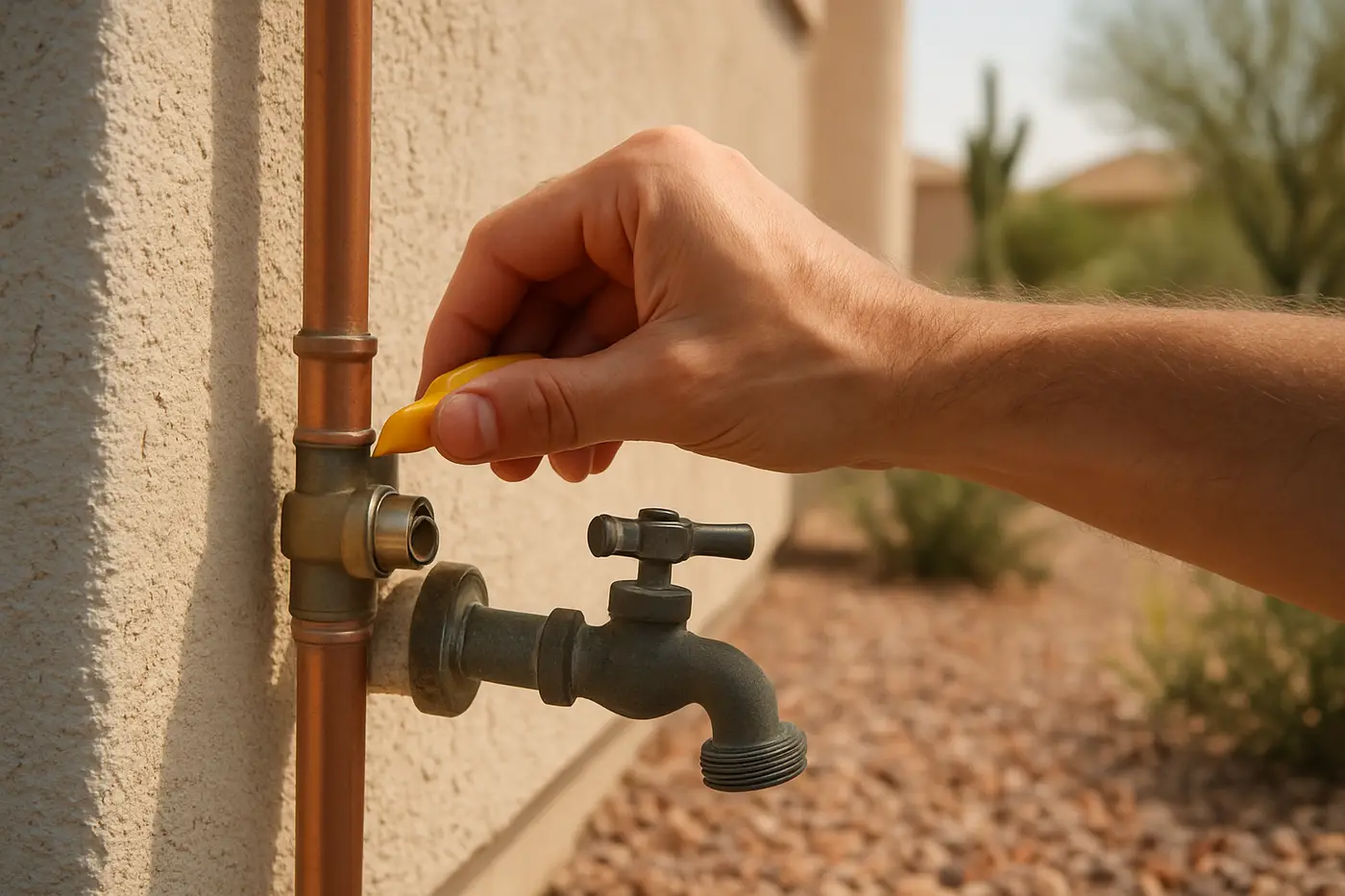
- At the main shut-off riser at the front of the house, near the hose bib and PRV.
- In the attic, if the supply lines were run overhead.
Do not confuse it with two other materials. Grey PVC electrical conduit is rigid and larger. PEX, the modern replacement, is usually red, blue or white, and flexible. If the visible pipe is grey and the house is from the late 1970s to the mid-1990s, assume the whole system is PB until a plumber confirms otherwise. Partial repipes are common, so a copper stub at the water heater does not mean the walls are copper.
Why polybutylene fails in Phoenix
Polybutylene was installed across the Phoenix area during a building boom, and it fails for reasons that are worse here than in most places.
Chlorine. Municipal water is chlorinated to keep it safe, and chlorine attacks polybutylene from the inside. The pipe wall becomes brittle, flakes, and eventually splits. Fittings go first, because the crimp puts the pipe under constant stress right where the chemistry is weakening it, but runs fail too.
Pressure. Many Phoenix zones deliver street pressure above 80 psi. The PRV at the front of the house is supposed to hold that down, and PRVs wear out after roughly 10 to 15 years. A PB system on a failed PRV is under full street pressure at every fitting.
Heat. Supply lines in Phoenix attics and garages spend the summer in air well over 110°F. Plastic that is already brittle from chlorine does not like heat cycling.
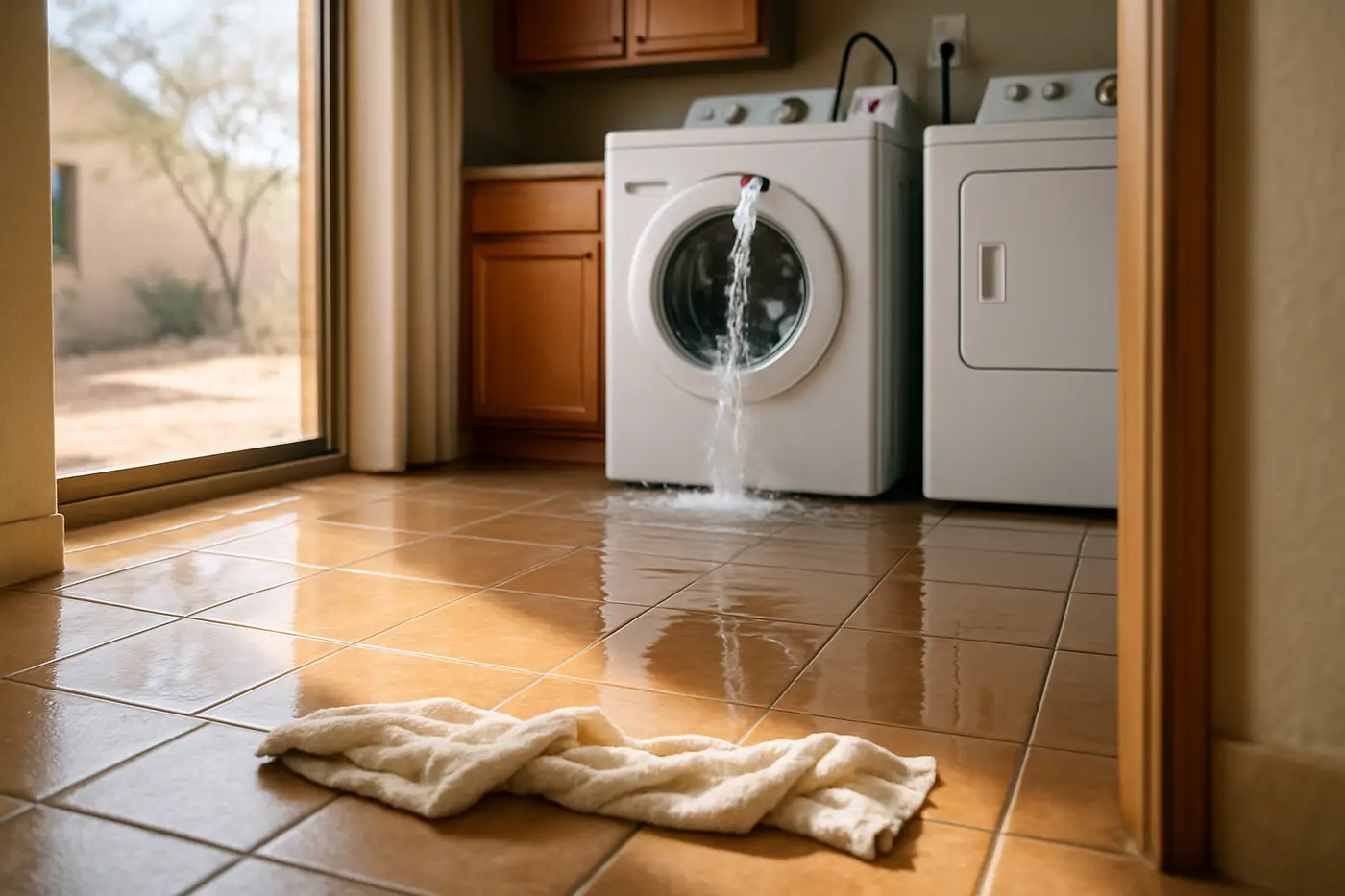
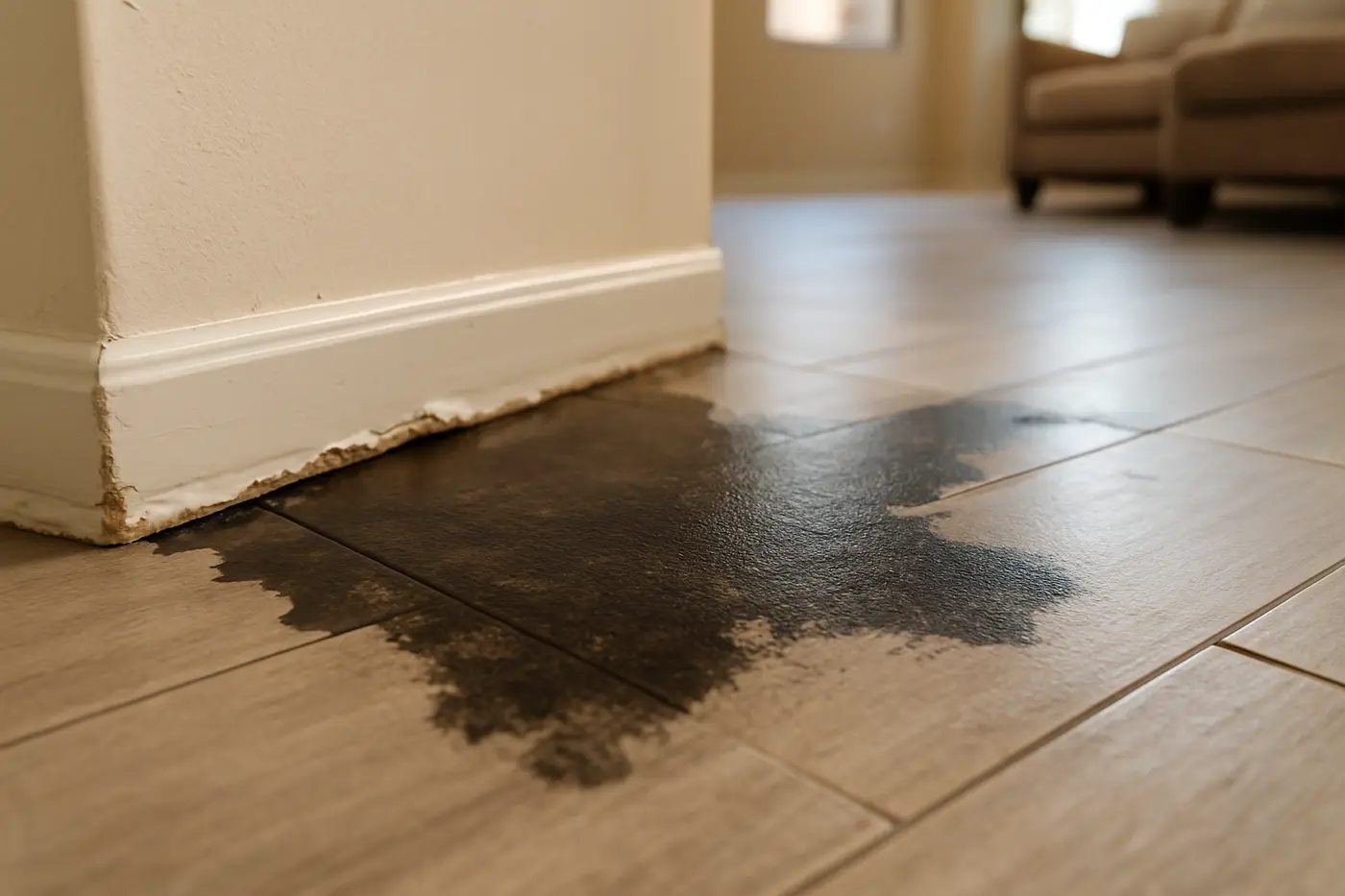
The failure is usually sudden. A fitting behind a shower valve or in the ceiling of a two-story lets go, and water runs until someone closes the main. That is why PB is an emergency-plumbing problem rather than a maintenance one. Our burst pipe repair page covers what a same-night PB fitting repair involves.
Where the polybutylene is
The 1978 to 1995 window maps onto specific parts of the Valley.
- Biltmore 85016: 1970s to 1990s condos, townhomes and gated communities, many from the PB era, with the added complication of shared walls and HOA rules about who pays for what.
- Paradise Valley Village 85032: 1970s to 1990s subdivisions off Cave Creek Road and Tatum, PB and early copper, with aging water heaters and PRVs to match.
- Moon Valley 85023: 1970s and 1980s custom homes, copper and PB era, long runs on large lots.
- Deer Valley 85027: PB in the older 1980s tracts, PEX in the newer ones.
- Ahwatukee 85044: PB in the 1980s tracts, copper slab leaks in the others.
If you live in one of these areas in a home from that era and have never confirmed the pipe material, do it this month.
Spot repair or repipe
| Spot repair of a failed PB fitting | Whole-house repipe to PEX | |
|---|---|---|
| Typical Phoenix cost | $250–$1,200 accessible; $600–$2,500 with drywall access | $6,000–$18,000 for 1,500–3,000 sq ft |
| After-hours dispatch | Usually, since PB fails without warning: $150–$350 added | None; scheduled daytime work |
| Permit | Not normally required for a section repair | Required from the City of Phoenix Planning and Development Department or the equivalent in Scottsdale, Tempe, Mesa, Paradise Valley or Tolleson |
| What it fixes | One fitting or one section | Every supply line in the house |
| What it leaves | The rest of the PB, aging at the same rate | New PEX, new angle stops, usually a new PRV |
| Drywall | One access opening at the leak | Multiple openings, patched but not painted |
| Insurance | Damage covered under HO-3 if sudden; pipe repair usually not | Not covered; a homeowner expense |
A single spot repair is the right call when a fitting fails and you need the water back on tonight. It is the wrong call as a strategy. Every PB house we see on its third or fourth repair has spent more in after-hours fees and drywall than the first repipe estimate would have cost.
What a repipe involves
A PEX repipe of a Phoenix single-story home is a scheduled job, not an emergency, and it follows a predictable sequence.
- Permit. The plumber pulls a permit from the City of Phoenix Planning and Development Department, or from the equivalent department in Scottsdale, Tempe, Mesa, Paradise Valley or Tolleson. Phoenix follows the International Plumbing Code with local amendments. A repipe quote without a permit is not a complete quote. Verify any contractor’s license with the Arizona Registrar of Contractors before signing.
- Routing. New PEX lines are run through the attic and dropped down inside walls to each fixture. This avoids the slab entirely, which is the point: the old PB is abandoned in place.
- Access. Drywall openings are cut at each fixture drop and where lines change direction. Those are patched afterward but not painted.
- Fixtures and valves. New angle stops and supply lines at every fixture, new water heater connections, and usually a new PRV at the main, since a repipe with a worn PRV is a repipe under too much pressure.
- Inspection. The city inspects before the walls are closed.
Water is typically off for part of each work day and back on each night. A repipe is also the moment to add a water softener if you want one ($1,500 to $4,000), since very hard Phoenix water at 10 to 17 grains per gallon is what shortens the life of the water heater, fixtures and valves you are about to replace.
While you wait for the repipe
- Replace the PRV if it is past 10 to 15 years or if pressure at a hose bib reads high. At $350 to $900 it is the single best thing you can do for aging PB.
- Find and test the main shut-off valve at the front of the house. If it is seized, replace it now. Our shut-off guide shows where it is and how to close it.
- Replace toilet and washing machine supply lines with braided stainless, since those fail under pressure too.
- Consider closing the main when you leave town for more than a day.
- Photograph exposed PB at the water heater and under sinks now, so you have a record for insurance and for the sale file.
If a fitting does let go, close the main, drain a faucet, move belongings, photograph the damage and call. Electronic leak detection at $250 to $600 finds a PB leak behind drywall without opening more wall than necessary.
Insurance, the settlement and selling
The Cox v. Shell class action settlement from 1995 has long since closed. There is no fund paying Phoenix homeowners to replace polybutylene; the repipe is your expense. A standard Arizona HO-3 policy covers the sudden water damage from a burst PB fitting, but not the pipe repair and not the repipe.
Valley home inspectors know the PB window and flag grey supply pipe. A permitted repipe, with the inspection record, closes that conversation before it becomes a price negotiation. Our 2026 cost guide explains how permits and access shape the final number.
Key takeaways
- Grey plastic supply pipe in a 1978 to 1995 Phoenix home is polybutylene. Confirm it this month.
- Chlorine, high street pressure and attic heat make PB fail suddenly, usually at fittings, usually inside a wall.
- Spot repairs are for tonight. A permitted PEX repipe at $6,000 to $18,000 is the fix.
- Replace a worn PRV and test the main shut-off while you plan the repipe.
- The 1995 settlement is closed; insurance covers the damage, not the pipe.